हरि सर्वोत्तम । वायु जीवोत्तम | श्री गुरुभ्यो नमः
Clickable links for: Translation, Singing, Moola
Introduction
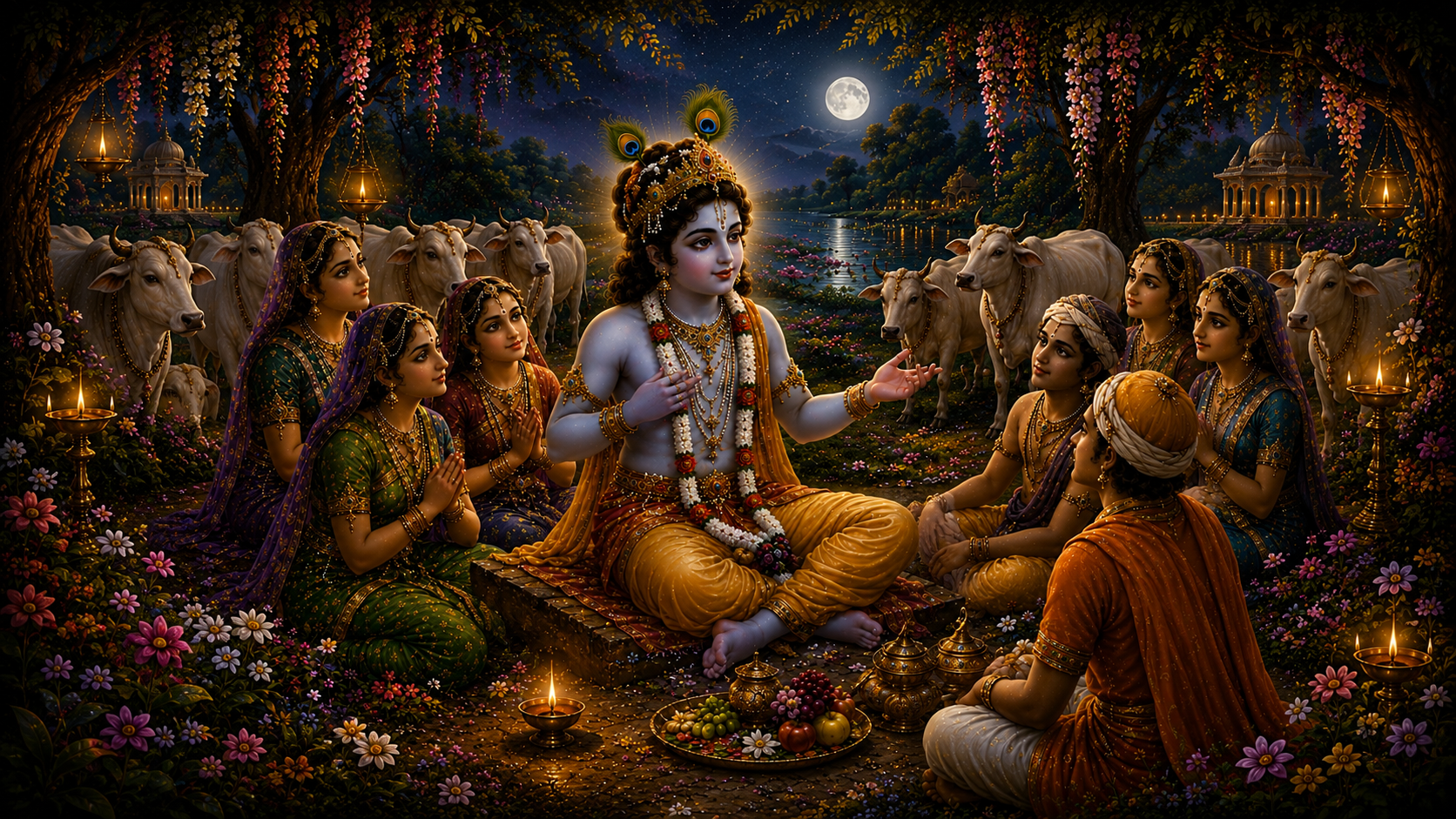
The enchanting song of the Gopikas, गोपी-गीतम्, appears in the blessed Tenth Skandha of Shrimad Bhaagavatam.
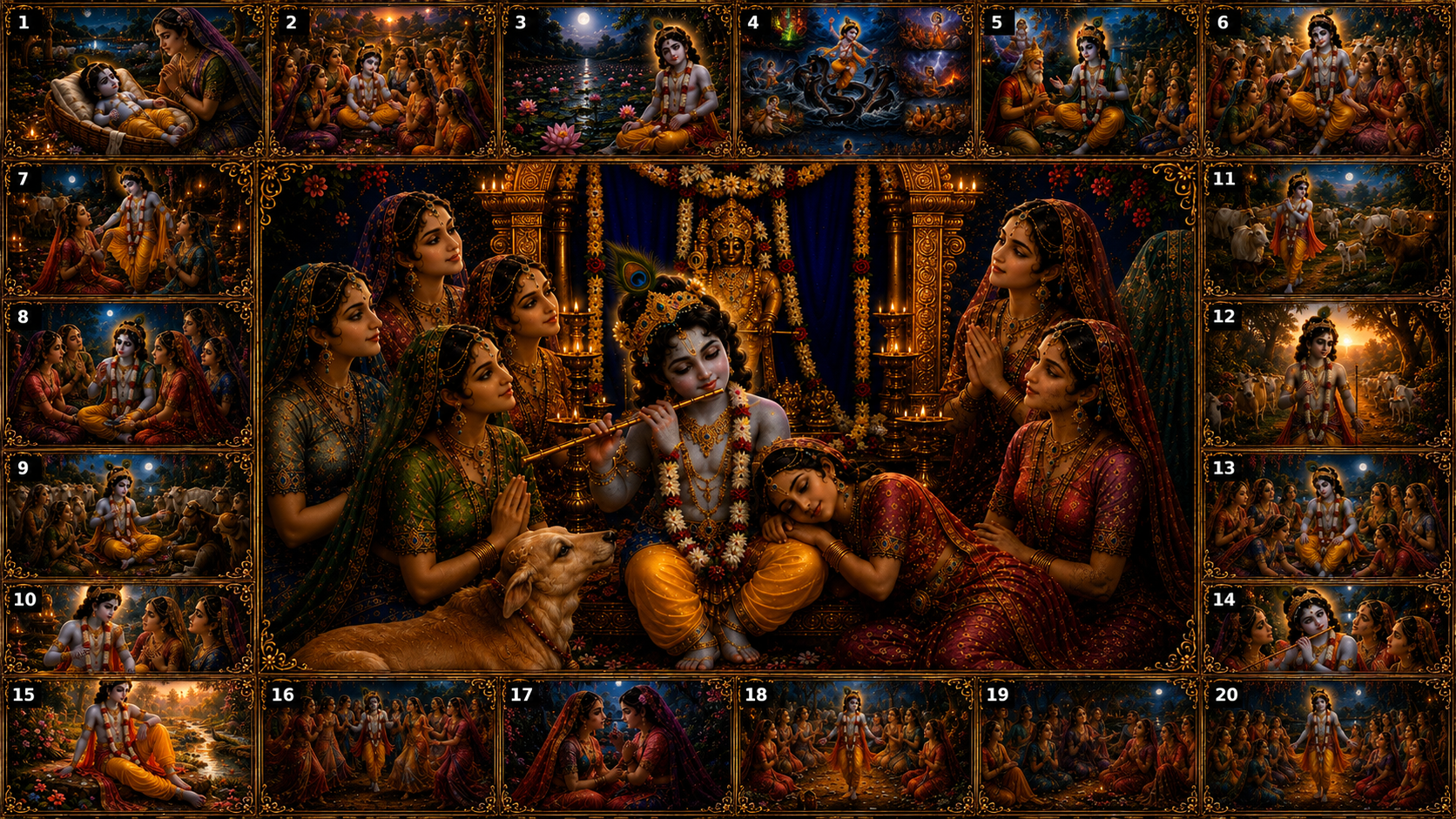
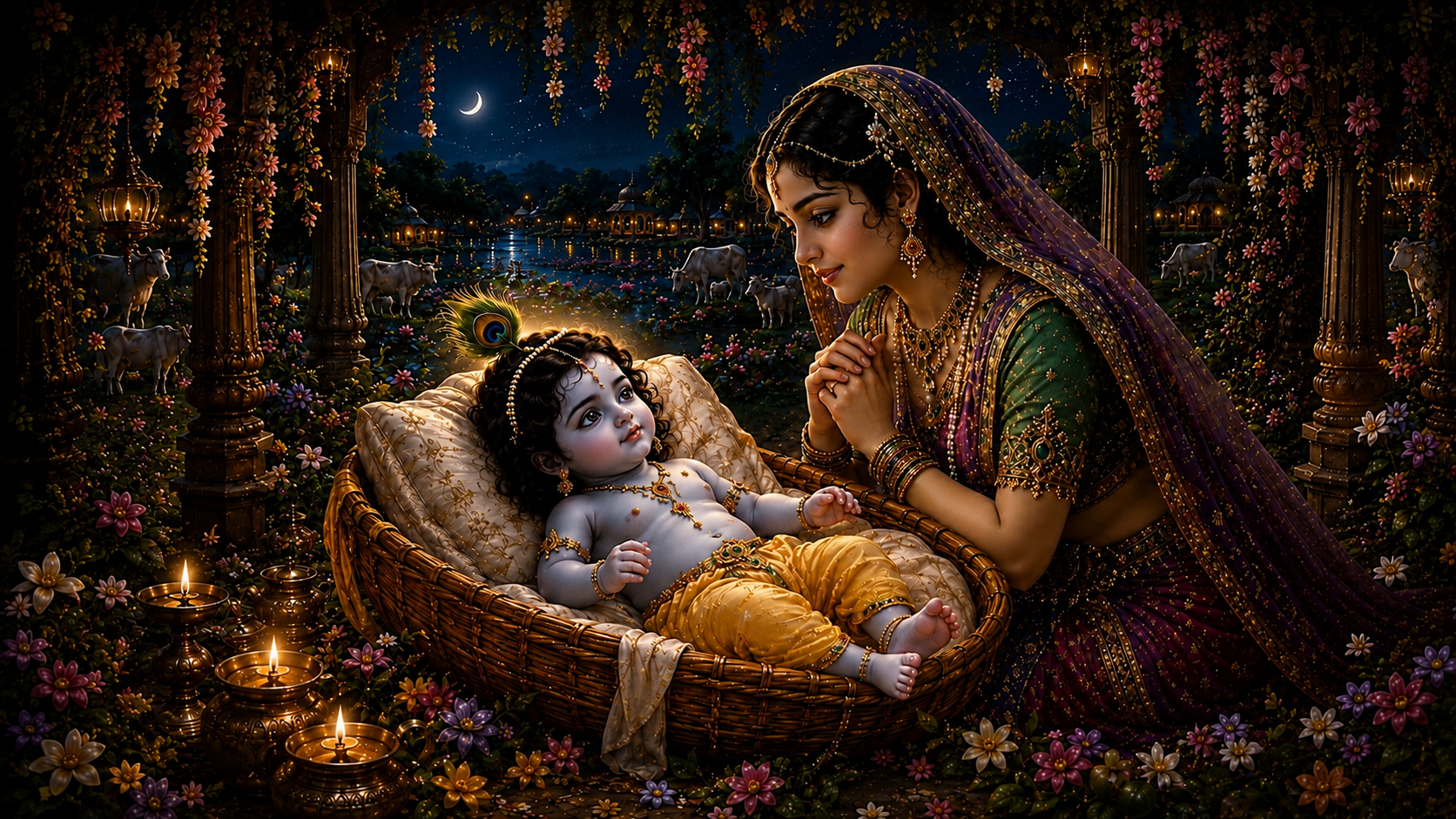
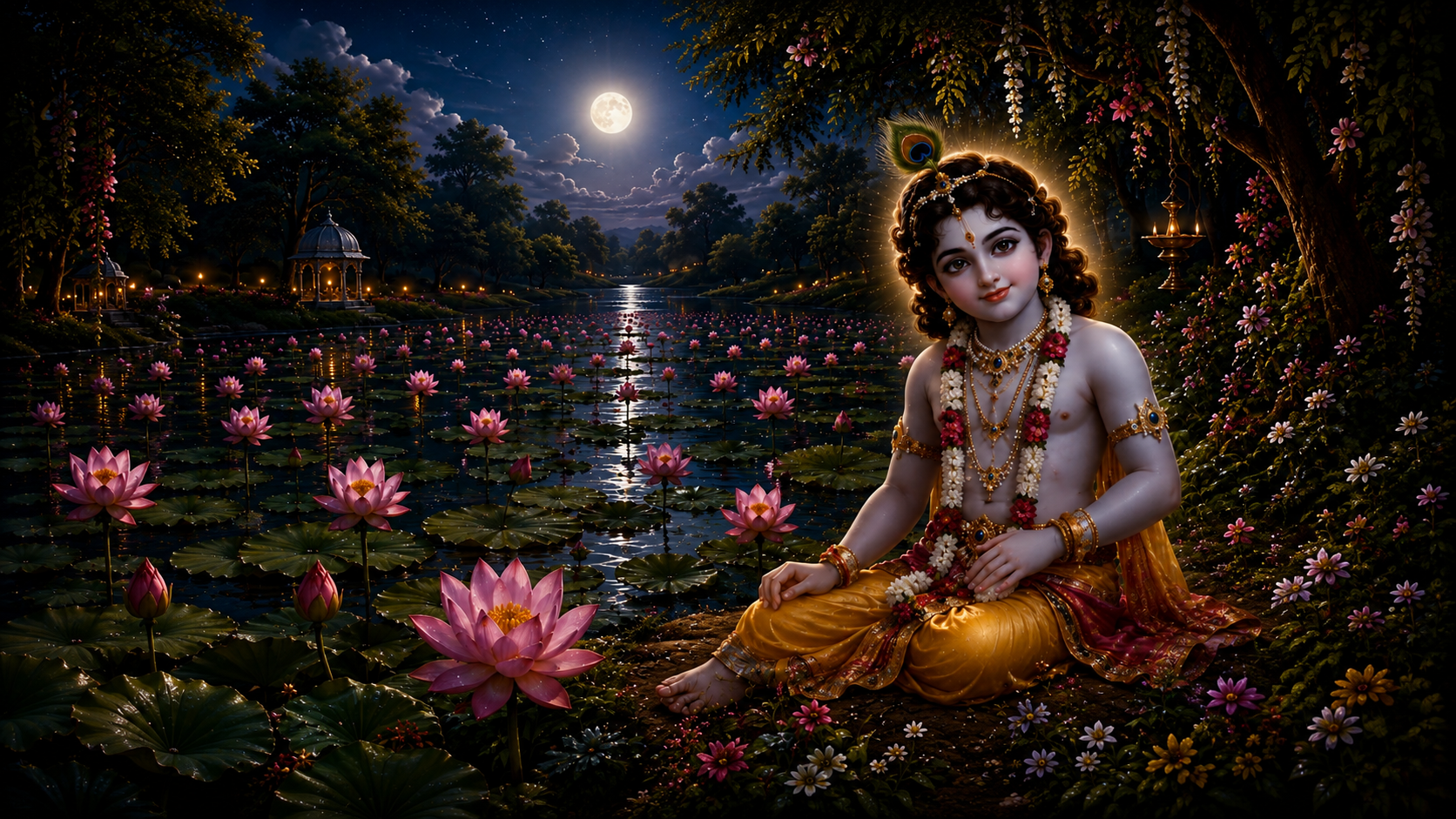
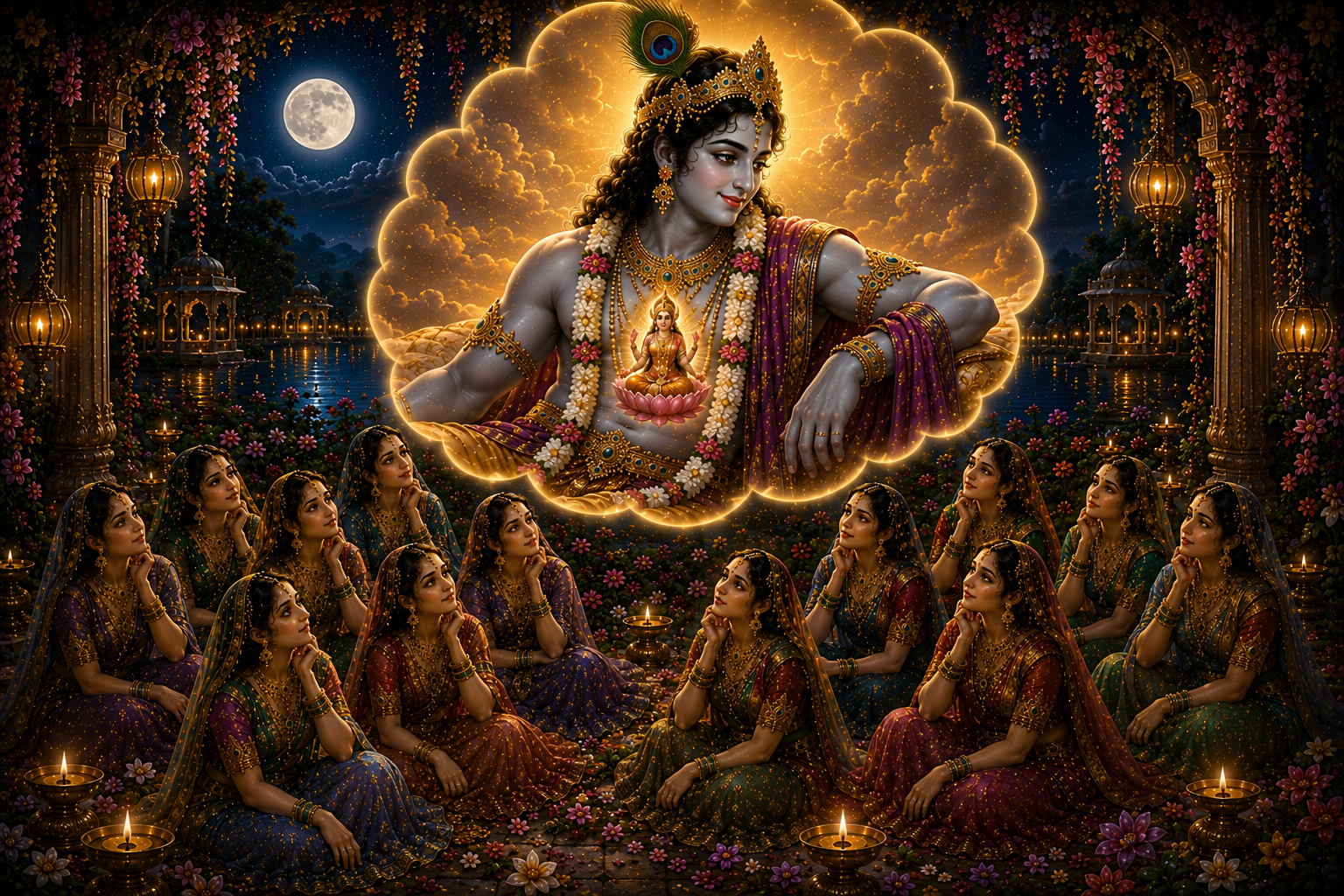
One cool autumn evening in Vraja, Lord Krishna decides to fulfill the wishes of the Gopikas. Under a rising moon, His divine flute enchants the Gopikas to abandon their homes and families to gather around young Krishna. Each Gopika desires to be with the Lord alone, so He manifests individually for each of them per their desires.
Alas, this invokes a feeling of superiority and consequent arrogance in them – “Krishna chose me over all others. I am the most beautiful!”. One particular Gopika even asks to ride on Krishna’s shoulders! To teach them a lesson in humility, the Lord then disappears in a flash!
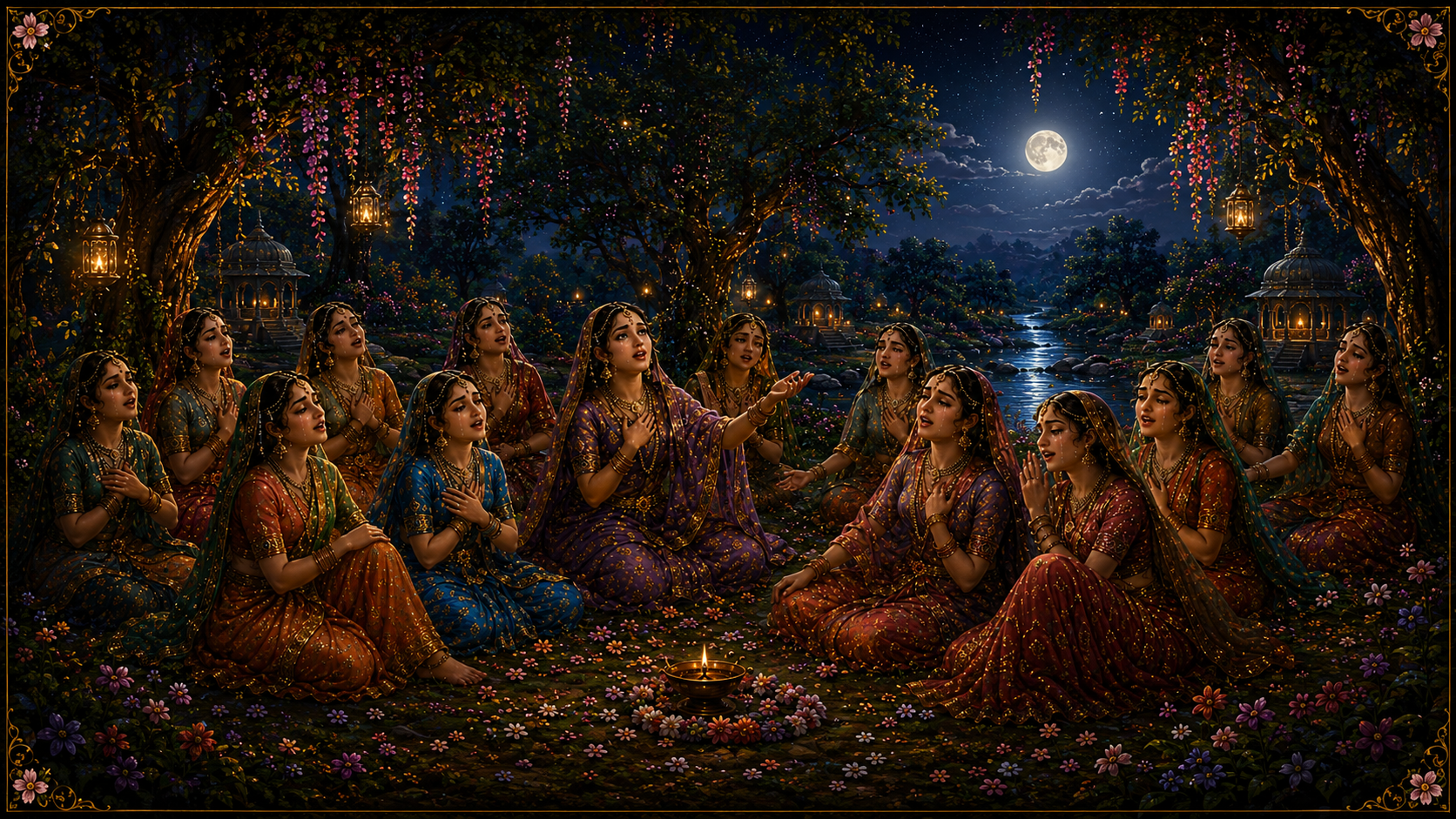
The distraught Gopis then wander around Vrundaavana searching for Krishna – asking the trees and plants where He went, remembering His form, words, smile, flute, and divine deeds. In that state of intense separational devotion (विरह-भक्ति) they sing the immortal verses of Gopi-Geetam meditating on the Lord while waiting for his return on the banks of River Yamuna.
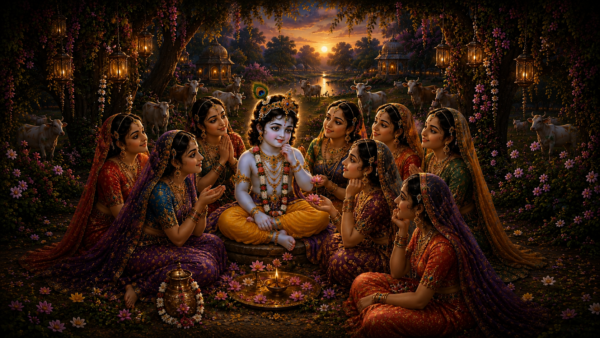
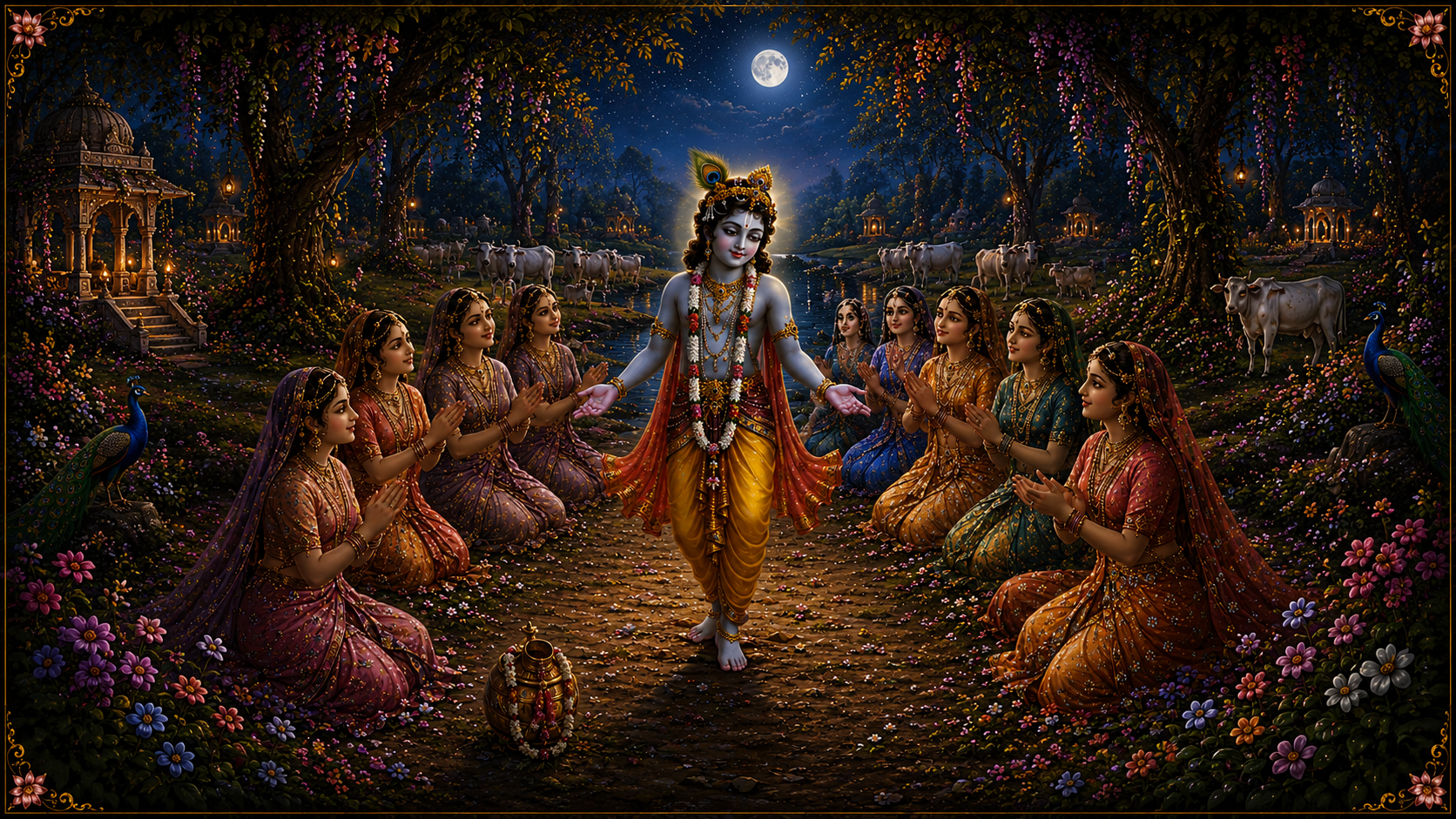
The Lord then reappears and the repentant Gopika-s gather around him with great affection. He highlights the importance of unattached devotion and divine love, especially during difficult times. And since they have shown this, the Lord then blesses them to be liberated and graces them with रास-क्रीड, the famous playful divine dance.
Some important points should be remembered to understand this stotra and its purport properly:
- Nothing is random. In the Lord’s divine plan every event has a reason . In this case, each Gopika’s close proximity to the Lord is not accidental either – it is what they earned and desired previously, not because He needs anything from them.
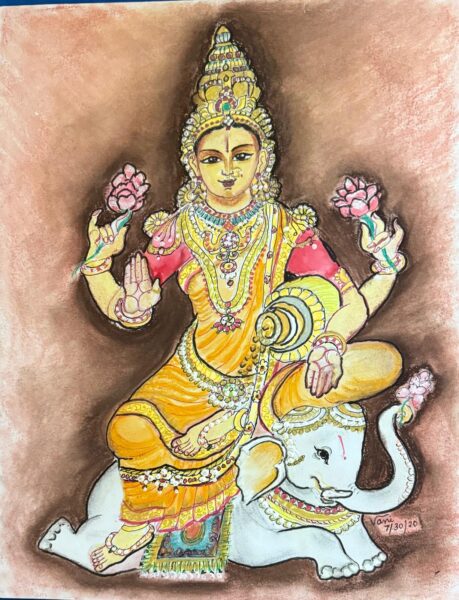
- The Gopika-s who met with Krishna are not ordinary emotional humans. They are highly elevated apsara-s with special presence of Yoga-Lakshmi in them who attained birth in Vraja through immense saadhana and devotion.
- So the Gopika’s desire is not a mundane wordly one, but is the spiritual longing of devoted souls absorbed in the Lord.
- Despite popular depictions of Krishna as a romantic hero in Vraja, He is only a young cowherd boy of not even 10 years – tender, playful, radiant, and divinely beautiful, yet eternally the Supreme Lord Himself.
- Shri Madhvacharya repeatedly emphasizes that ALL avataara-s of the Lord are equally divine, flawless and beyond material limitations. Specifically, the Bhaagavata refers to Lord here as completely blissful within Himself (आत्म-रम, स्वरमण). So रास-क्रीड should not be interpreted as passion and romance through the ordinary human lens.
- The Lord only blesses the Gopis with divine love as per their apsara nature to reward them for their devotion and fulfill their wishes. However, as soon as they lose their bhakti and forget He is Lord Almighty, He disappears.
- The consequent विरह भक्ति (devotion due to separation) shown in the Gopi-Geetam is itself spiritually significant. Separation intensifies remembrance. Constant remembrance of the Lord deepens devotion and eventually surrender. Thus even Krishna’s disappearance becomes a means for driving the devotees into uninterrupted contemplation of the Supreme.
- The verses alternate between the Gopika’s emotions, experiences and philosophical understanding, reflecting both love for Krishna and also acknowledging His divinity.
- Detailed remembrance of Krishna’s feet, smile, flute, and speech shows that Bhakti should guide senses towards Hari.
- The merciful Krishna reappears to the Gopika-s at the end of their song, adorned in yellow as the “enchanter even of Manmatha, the god of Love”. This proves that even if the Lord appears to forsake a true devotee, it is but a temporary test of devotion eventually culminating in direct experience of the Lord.

अथ गोपीगीतम् (Translation)
गॊप्य ऊचुः
जयति तेऽधिकं जन्मना व्रजः श्रयत इन्दिरा साधु तत्र हि ।
दयित दृश्यतां त्वां दिदृक्षतां त्वयि धृत-असवः त्वां विचिन्वते ॥१॥
Vraja (व्रजः) has become exceedingly glorious (जयति तेऽधिकं) by Your birth (जन्मना). Indeed (हि), Lakshmi Devi (इन्दिरा) ever dwells (श्रयत) there (तत्र) most auspiciously (साधु).
O Beloved (दयित), appear before us (दृश्यताम्). We who long to behold You (दिदृक्षतां त्वाम्), having placed (धृत) our very life-breaths (असवः) in You (त्वयि), search everywhere (विचिन्वते) for You (त्वाम्).
व्रज-जन-आर्ति-हन् वीर-योषितां निज-जन-स्मय-ध्वंसन-स्मित ।
भज सखे भवे किङ्करीः स्म नो जल-रुह-आननं चारु दर्शयन् ॥२॥
O destroyer (हन्) of the sorrow (आर्ति) of the people (जन) of Vraja (व्रज), O Lord of the brave women of Vraja (वीर-योषिताम्), Your smile (स्मित) destroys (ध्वंसन) the pride (स्मय) of Your own devotees (निज-जन).
O friend (सखे), accept (भज) us (नः) as Your maidservants (किङ्करीः) in this worldly existence (भवे), showing (दर्शयन्) Your beautiful (चारु) lotus-like (जल-रुह) face (आननम्).
शरद्-उदाशये साधु जात-सत्-सरसिज-उदर-श्री-मुषा दृशा ।
सुरत-नाथ ते शुल्क-दासिका वरद निघ्नतो नेह किं वधः ॥३॥
Just by Your glance (दृशा), which steals away (मुषा) the beauty (श्री) of the inner whorl (उदर) of fully blossomed (जात-सत्) lotuses (सरसिज) in the pure autumn waters (शरद्-उदाशये),
O Lord (नाथ) of divine love (सुरत), O bestower of boons (वरद), we are like Your purchased servants (शुल्क-दासिका). If You are leaving us (निघ्नतः) here (इह), is it not indeed (किं) like killing us (वधः)?
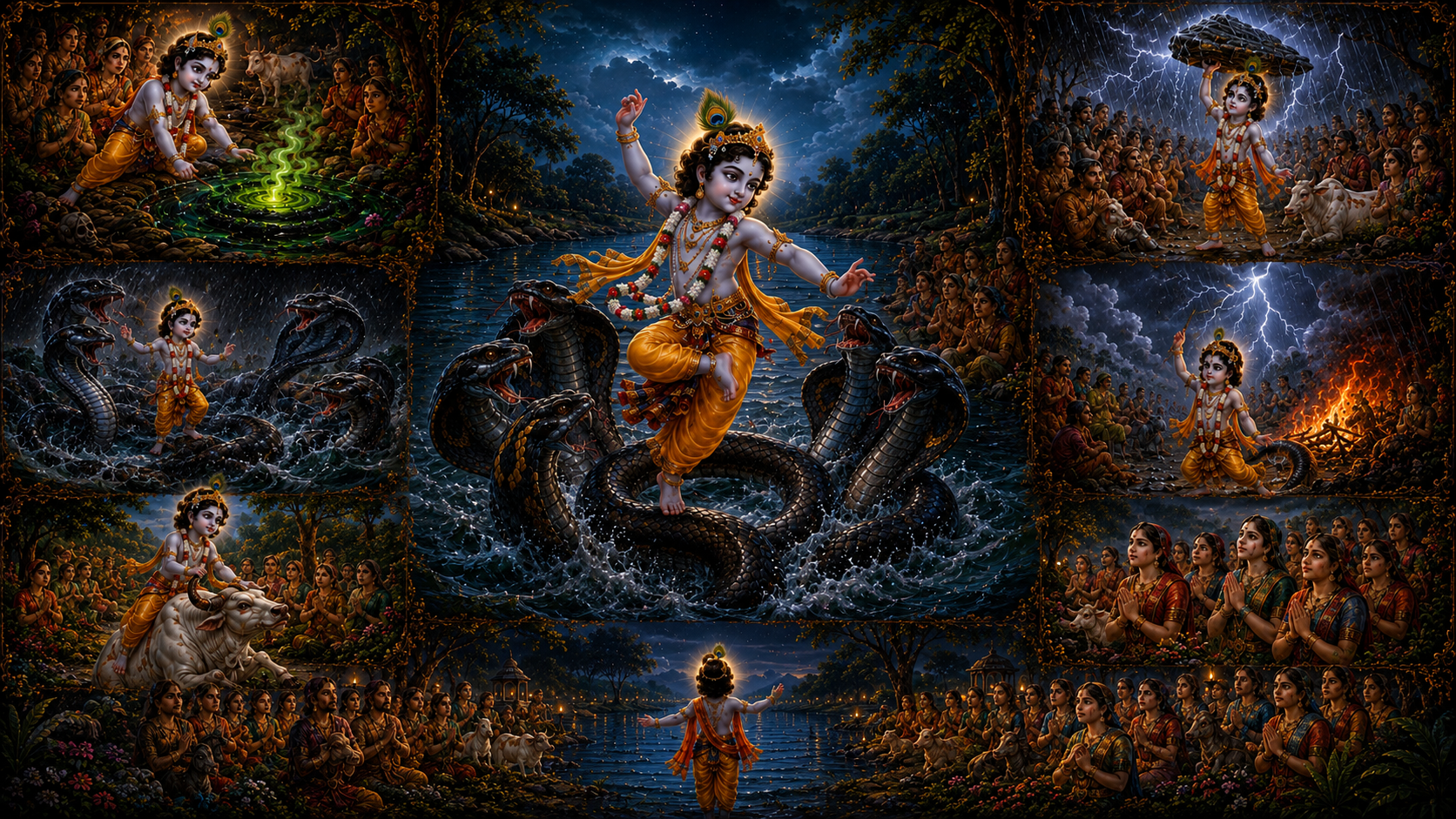
विष-जल-आशयात् व्याल-राक्षसात् वर्ष-मारुतात् वैद्युत-अनलात् ।
वृष-मयात् भयात् विश्वतः-मुखात् वृषभ ते वयं रक्षिताः मुहुः ॥४॥
From the poisoned waters (विष-जल-आशयात्), from serpent-demons (व्याल-राक्षसात्), from storm and wind (वर्ष-मारुतात्), from lightning and fire (वैद्युत-अनलात्),
from the bull-demon (वृष-मयात्), and from fears (भयात्) arising from every direction (विश्वतः-मुखात्), O mighty one (वृषभ), we (वयम्) have repeatedly (मुहुः) been protected (रक्षिताः) by You (ते).
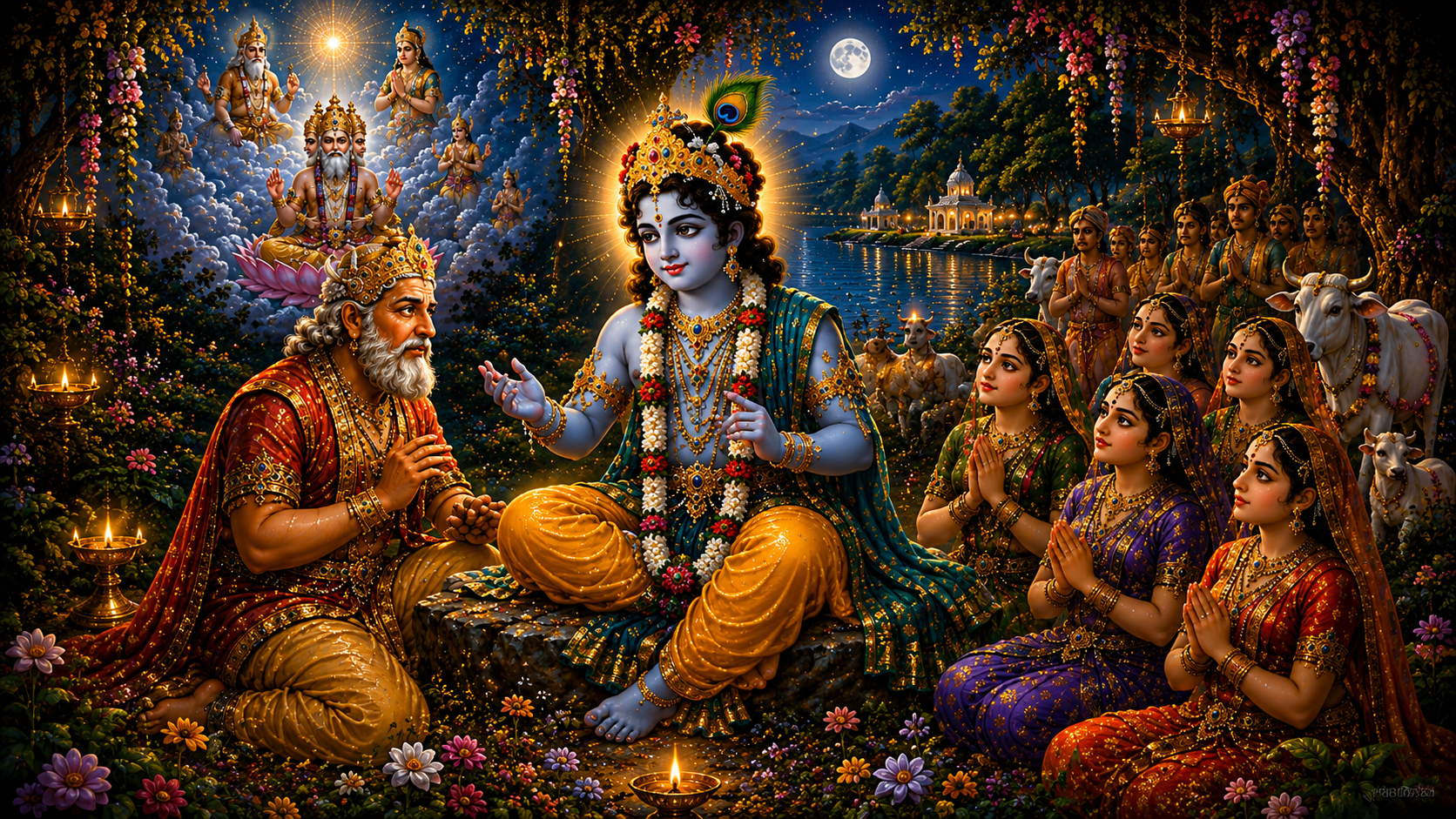
न खलु गोपिका-नन्दनः भवान् अखिल-देहिनाम् अन्तर्-आत्म-दृक् ।
विखनस-अर्चितः विश्व-गुप्तये सख उदेयिवान् सात्वतां कुले ॥५॥
You are not merely (न खलु) the delight-giver (नन्दनः) of the gopikas (गोपिका), O Krishna (भवान्). You are the inner (अन्तर) witness (आत्म-दृक्) of all (अखिल) embodied beings (देहिनाम्).
Worshipped by Brahma (विखनस-अर्चितः), You have arisen (उदेयिवान्), O friend (सख), in the clan of the Saatvatas (सात्वतां कुले) for the protection (गुप्तये) of the universe (विश्व).
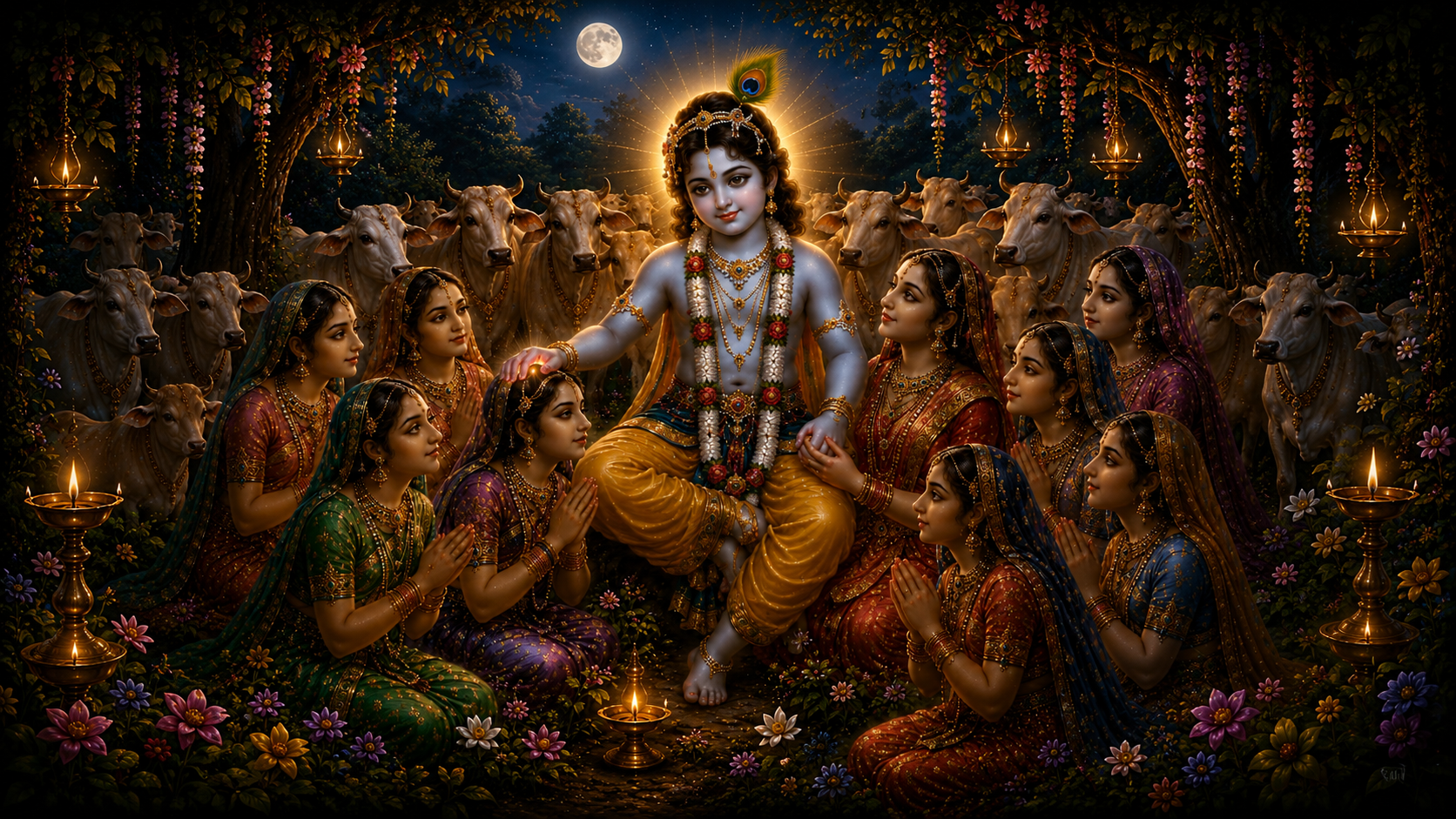
विरचित-अभयं वृष्णि-वर्य ते शरणम् ईयुषां संसृतेः भयात् ।
कर-सरोरुहं कान्त काम-दं शिरसि धेहि नः श्री-कर-ग्रहम् ॥६॥
O best (वर्य) of the Vrishnis (वृष्णि), for those who have approached (ईयुषाम्) refuge (शरणम्) in You (ते) out of fear (भयात्) of worldly bondage (संसृतेः), You have granted (विरचित) fearlessness (अभयम्).
O Beloved (कान्त), place (धेहि) upon our heads (शिरसि नः) Your lotus-like hand (कर-सरोरुहम्) which holds the hands of your consort Shri (श्री-कर-ग्रहम्) and grants cherished desires (काम-दम्).
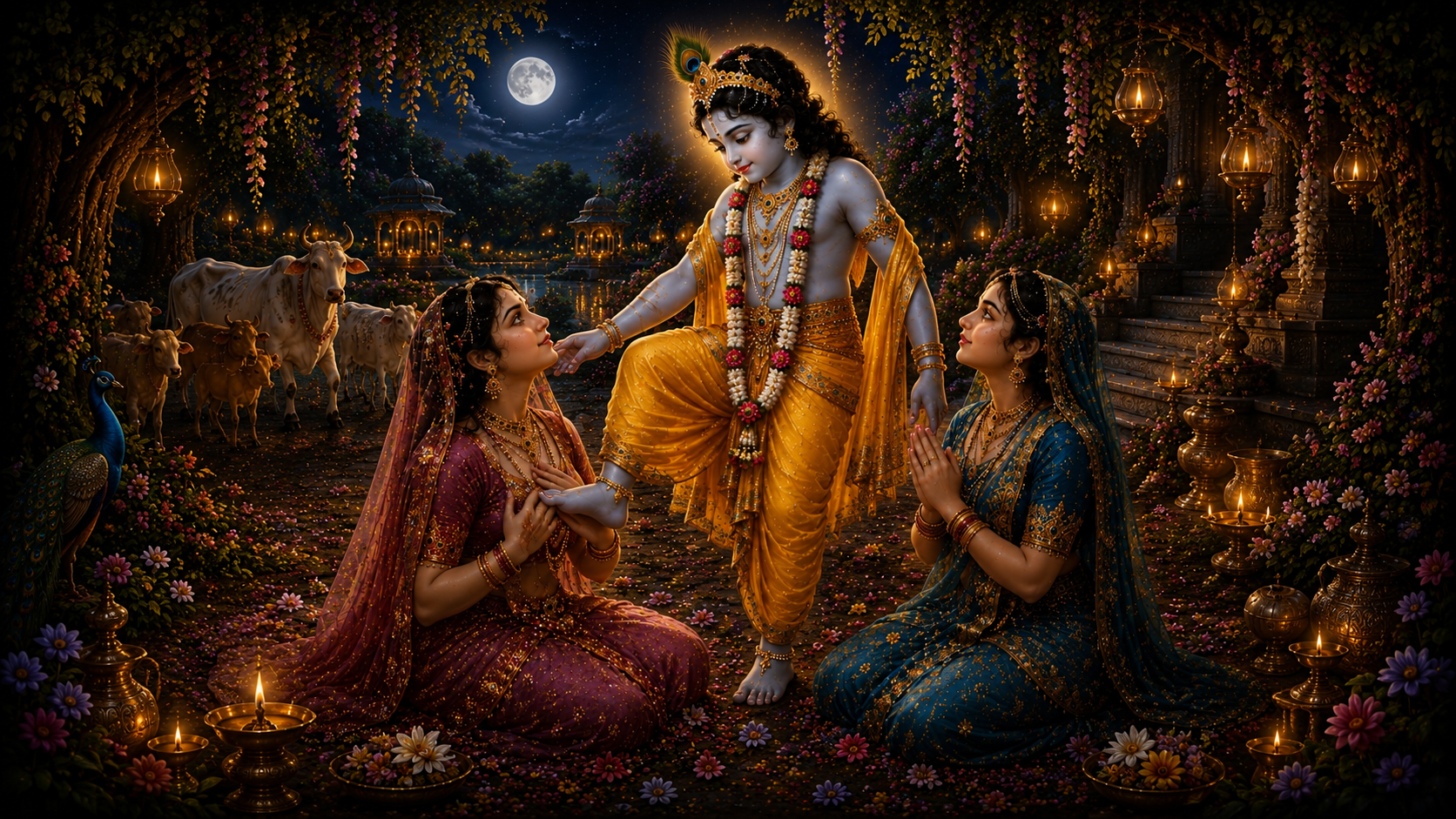
प्रणत-देहिनां पाप-कर्शनं तृण-चर-अनुगं श्री-निकेतनम् ।
फणि-फण-अर्पितं ते पद-अम्बुजं कृणु कुचेषु नः कृन्धि हृत्-शयम् ॥७॥
Your lotus-feet (पद-अम्बुजम्) – which destroy (कर्शनम्) the sins (पाप) of surrendered beings (प्रणत-देहिनाम्), which follow behind (अनुगम्) the cows (तृण-चर), and which are the abode (निकेतनम्) of Lakshmi (श्री),
which were placed (अर्पितम्) upon the hoods (फण) of the serpent (फणि) – place (कृणु) them upon our breasts (कुचेषु नः), and cut away (कृन्धि) the anguish hidden in our hearts (हृत्-शयम्).
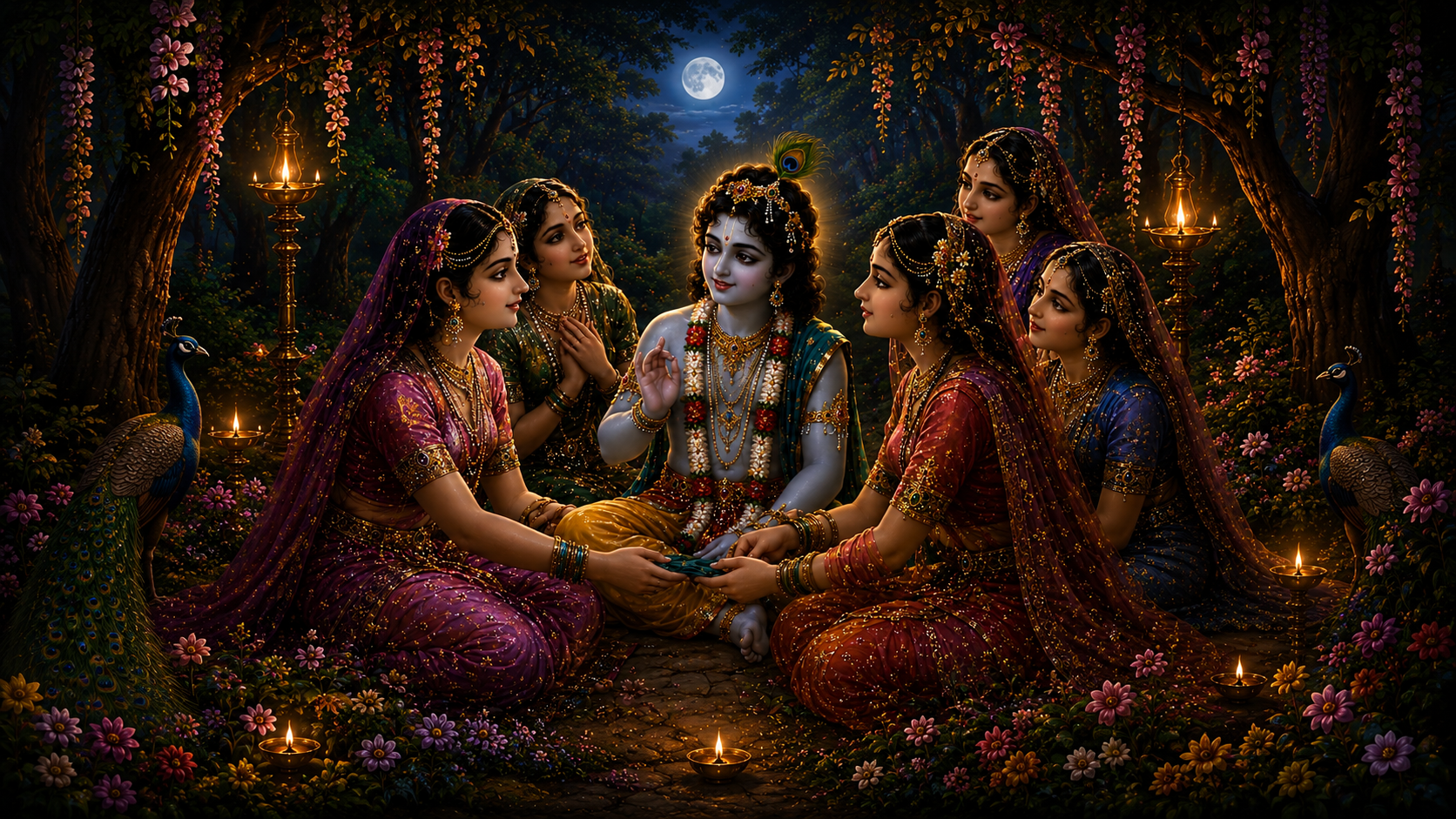
मधुरया गिरा वल्गु-वाक्यया बुध-मनोज्ञया पुष्कर-ईक्षण ।
विधि-करीः इमा वीर मुह्यतीः अधर-सीधुना आप्याययस्व नः ॥८॥
O lotus-eyed One (पुष्कर-ईक्षण), by Your sweet speech (मधुरया गिरा), by Your graceful words (वल्गु-वाक्यया), pleasing to the wise (बुध-मनोज्ञया),
O heroic Lord (वीर), these women before You (इमाः), rendered utterly dependent upon You (विधि-करीः), and bewildered in love (मुह्यतीः) — revive and fill us (आप्याययस्व नः) with the intoxicating nectar (सीधुना) [of words] from Your lips (अधर).
तव कथा-अमृतं तप्त-जीवनं कविभिः ईडितं कल्मष-अपहम् ।
श्रवण-मङ्गलं श्रीमत्-आततं भुवि गृणन्ति ते भूरि-दाः जनाः ॥९॥
The nectar (अमृतम्) of Your divine stories (कथा) – which gives life (जीवनम्) to the afflicted (तप्त), which is praised (ईडितम्) by sages (कविभिः), and which removes sins (कल्मष-अपहम्),
which is auspicious to hear (श्रवण-मङ्गलम्), filled with divine splendour (श्रीमत्), and spread everywhere (आततम्) – is sung (गृणन्ति) upon earth (भुवि) by those generous souls (भूरि-दाः जनाः) devoted to You (ते).
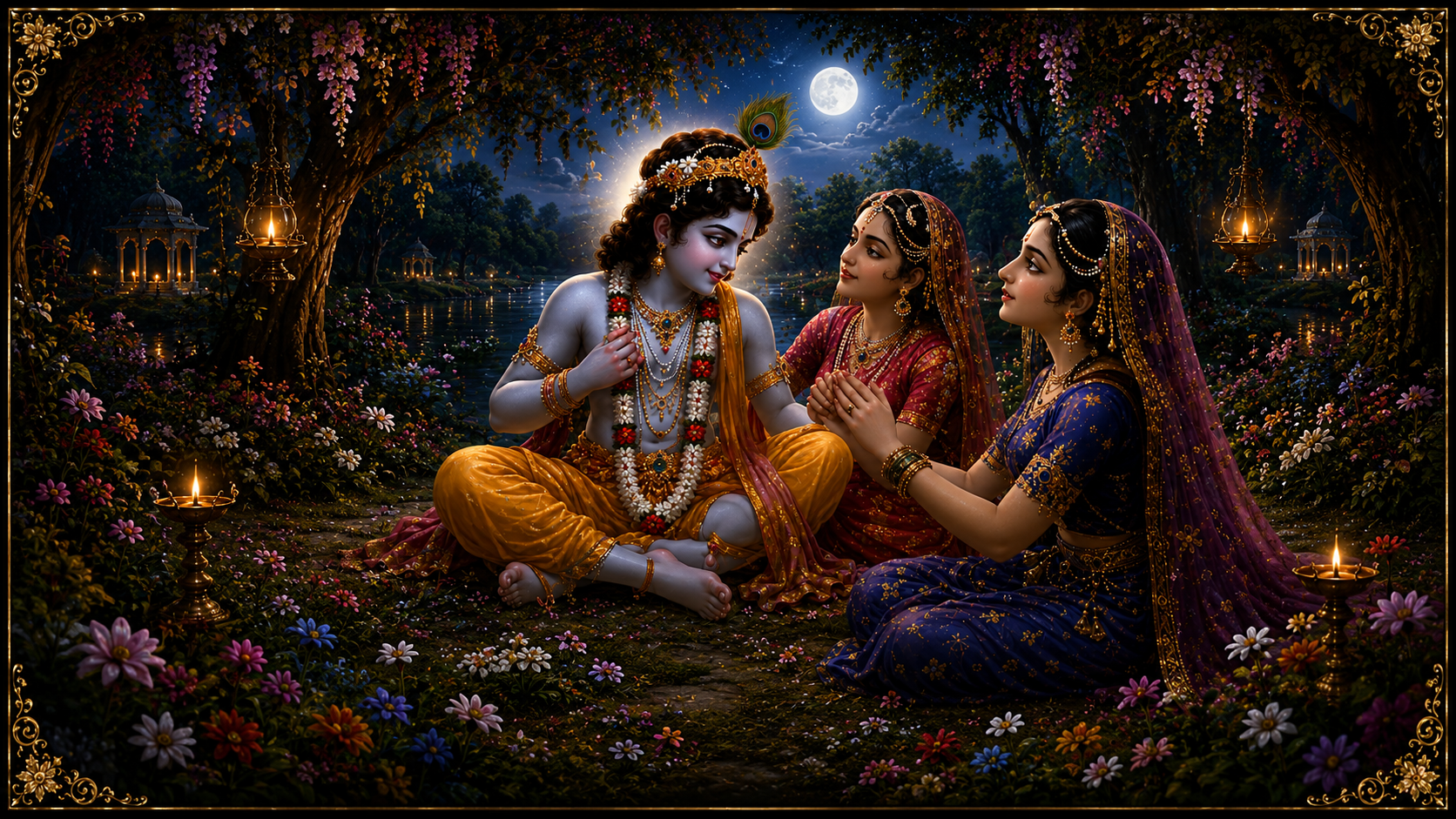
प्रहसितं प्रिय प्रेम-वीक्षणं विहरणं च ते ध्यान-मङ्गलम् ।
रहसि संविदः या हृदि-स्पृशः कुहक नः मनः क्षोभयन्ति हि ॥१०॥
O Beloved (प्रिय), Your gentle smile (प्रहसितम्), Your loving glances (प्रेम-वीक्षणम्), and Your playful wanderings (विहरणम्) are auspicious objects of meditation (ध्यान-मङ्गलम्),
those secret conversations (रहसि संविदः) of Yours (या), which all touch the heart (हृदि-स्पृशः), O deceiving Lord who disappeared (कुहक), indeed (हि) agitate and overwhelm (क्षोभयन्ति) our minds (नः मनः).
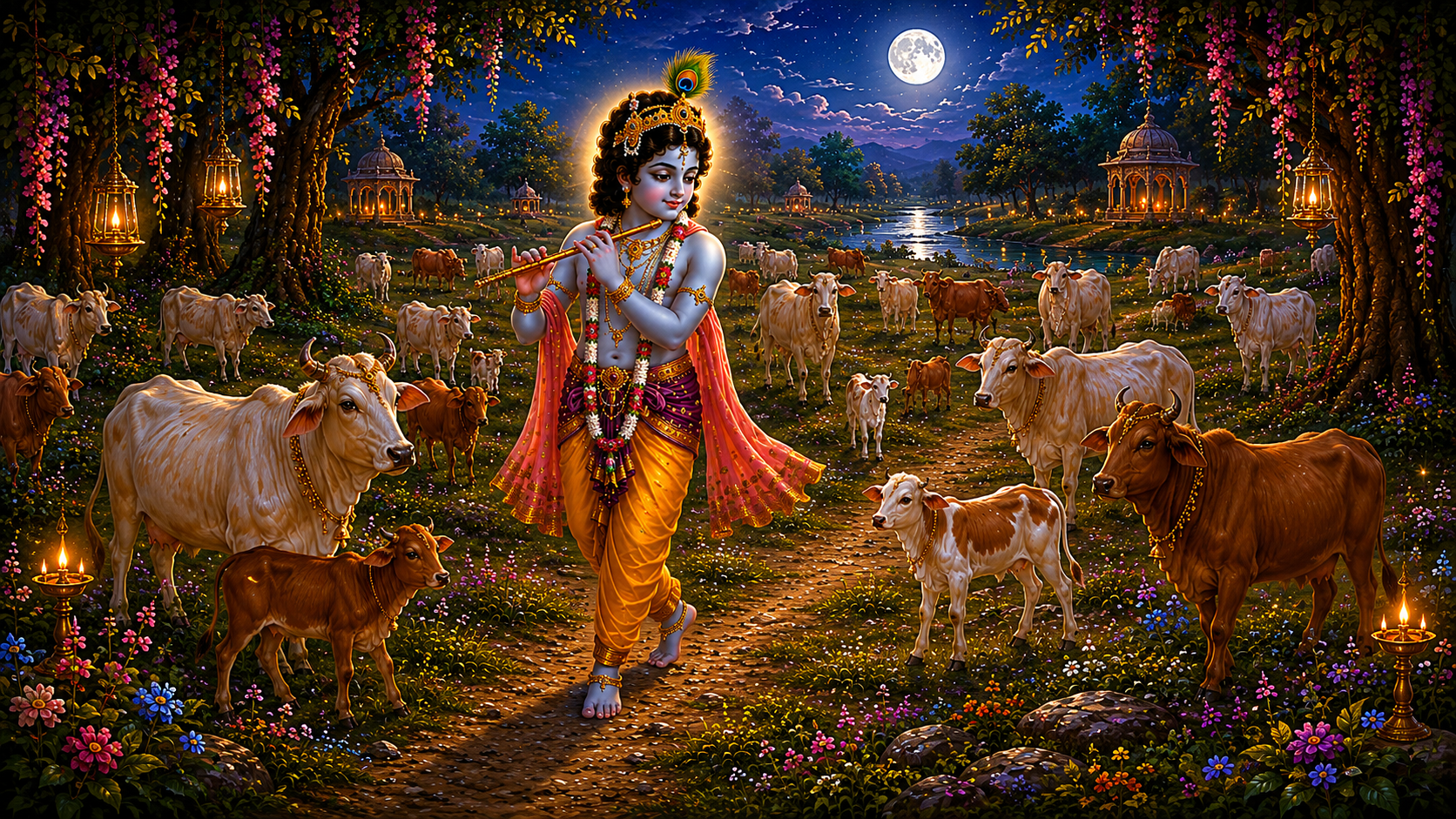
चलसि यद् व्रजात् चारयन् पशून् नलिन-सुन्दरं नाथ ते पदम् ।
शिला-तृण-अङ्कुरैः सीदतीति नः कलिल-तां मनः कान्त गच्छति ॥११॥
When (यत्) You wander (चलसि) from Vraja (व्रजात्), grazing (चारयन्) the cows (पशून्), O Lord (नाथ), Your feet (ते पदम्), delicate and lotus-beautiful (नलिन-सुन्दरम्),
may suffer pain (सीदति इति) from stones (शिला), grass (तृण), and sprouts (अङ्कुरैः); thinking thus, O Beloved (कान्त), our minds (नः मनः) go into (गच्छति) deep distress (कलिल-ताम्).
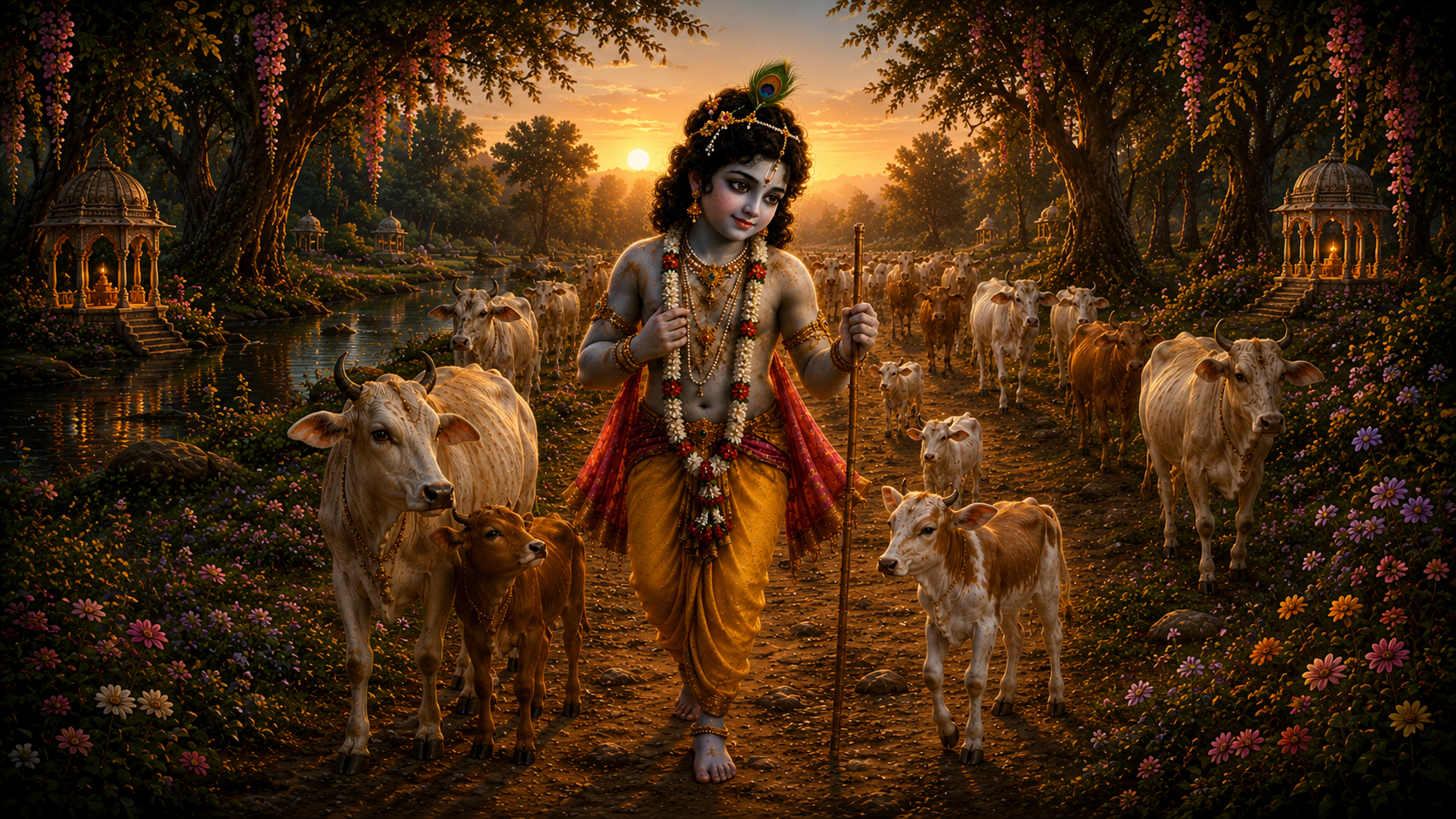
दिन-परिक्षये नील-कुन्तलैः वन-रुह-आननं बिभ्रत् आवृतम् ।
वन-रजस्-वलं दर्शयन् मुहुः मनसि नः स्मरं वीर यच्छसि ॥१२॥
At the close (परिक्षये) of the day (दिन), with dark curling locks (नील-कुन्तलैः), bearing (बिभ्रत्) Your lotus-like face (वन-रुह-आननम्) partly covered (आवृतम्),
and dust-covered (रजस्-वलम्) from the forest (वन), O heroic Lord (वीर), repeatedly (मुहुः) revealing Yourself (दर्शयन्), You awaken (यच्छसि) longing (स्मरम्) within our minds (नः मनसि).
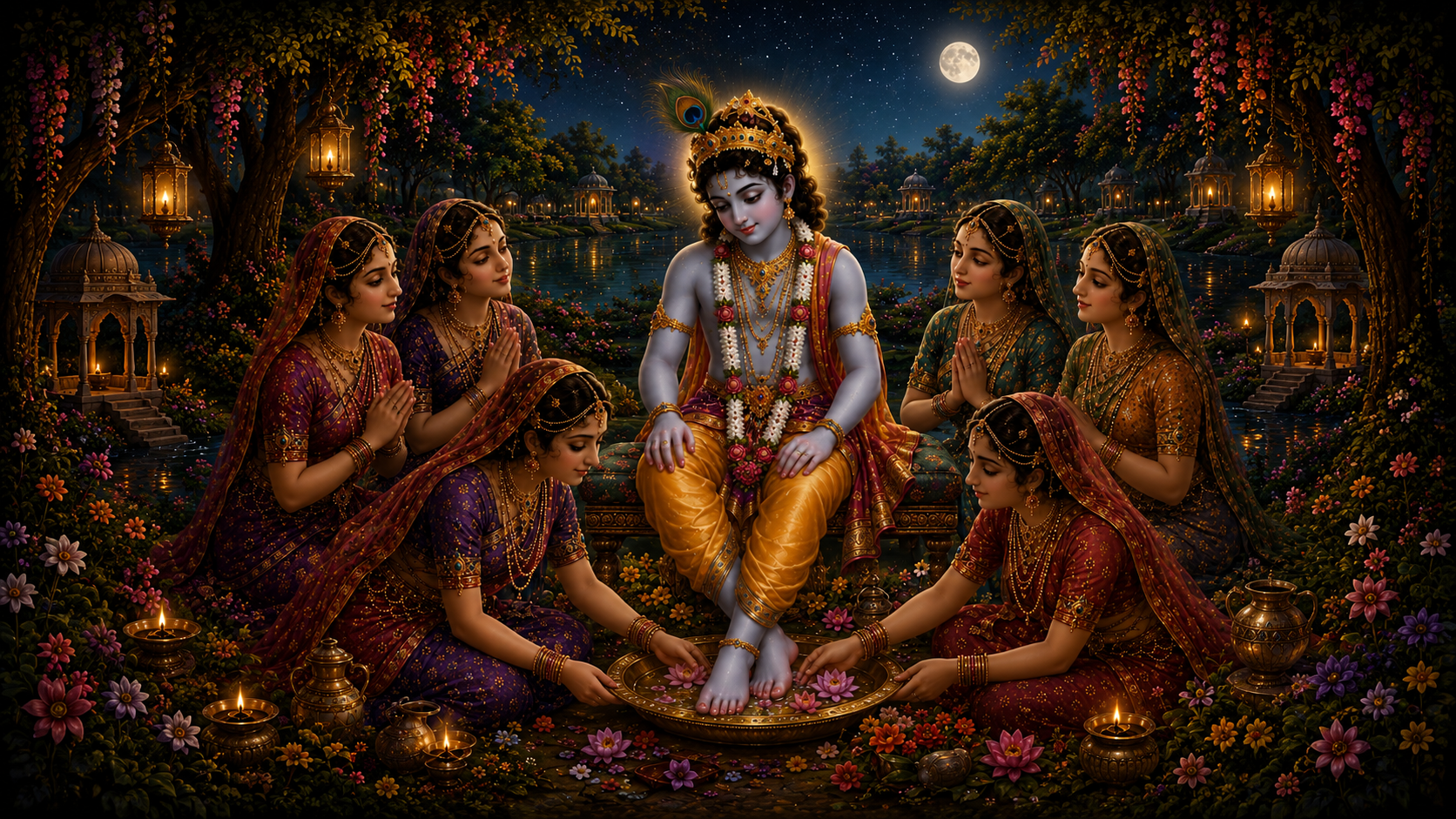
प्रणत-काम-दं पद्मज-अर्चितं धरणि-मण्डनं ध्येयम् आपदि ।
चरण-पङ्कजं शन्तमं च ते रमण नः स्तनेषु अर्पय आधि-हन् ॥१३॥
O Beloved (रमण), O destroyer (हन्) of sorrow (आधि), place (अर्पय) upon our breasts (नः स्तनेषु) Your lotus-feet (चरण-पङ्कजम्) – those feet
which grant desired blessings (काम-दम्) to those who surrender (प्रणत), which are worshipped (अर्चितम्) by Brahma and Lakshmi (पद्मज/पद्मजा), are the decoration (मण्डनम्) of Mother Earth (धरणि), upon whose meditation (ध्येयम्) all dangers(आपदि) are dispeled (शन्तमम्).
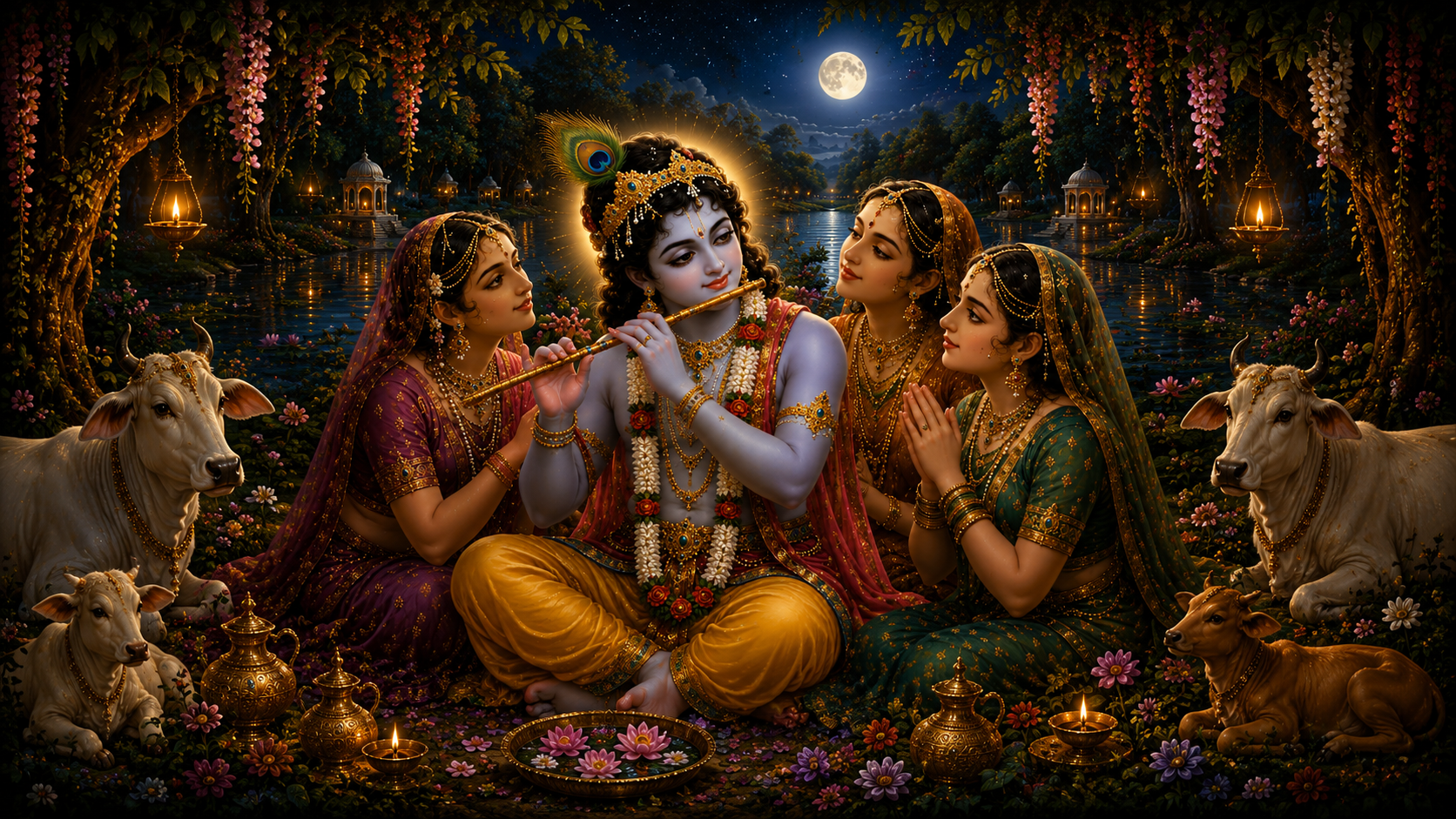
सुरत-वर्धनं शोक-नाशनं स्वरित-वेणुना सुष्ठु चुम्बितम् ।
इतर-राग-विस्मारणं नृणां वितर वीर नः ते अधर-अमृतम् ॥१४॥
O heroic Lord (वीर), grant (वितर) unto us (नः) the nectar (अमृतम्) of [words from] Your lips (ते अधर),
which increases divine love (सुरत-वर्धनम्), destroys sorrow (शोक-नाशनम्), which is well-kissed (सुष्ठु चुम्बितम्) by the melodious sounds of the flute (स्वरित-वेणुना), and which causes people (नृणाम्) to forget (विस्मारणम्) all other (इतर) attachments (राग).
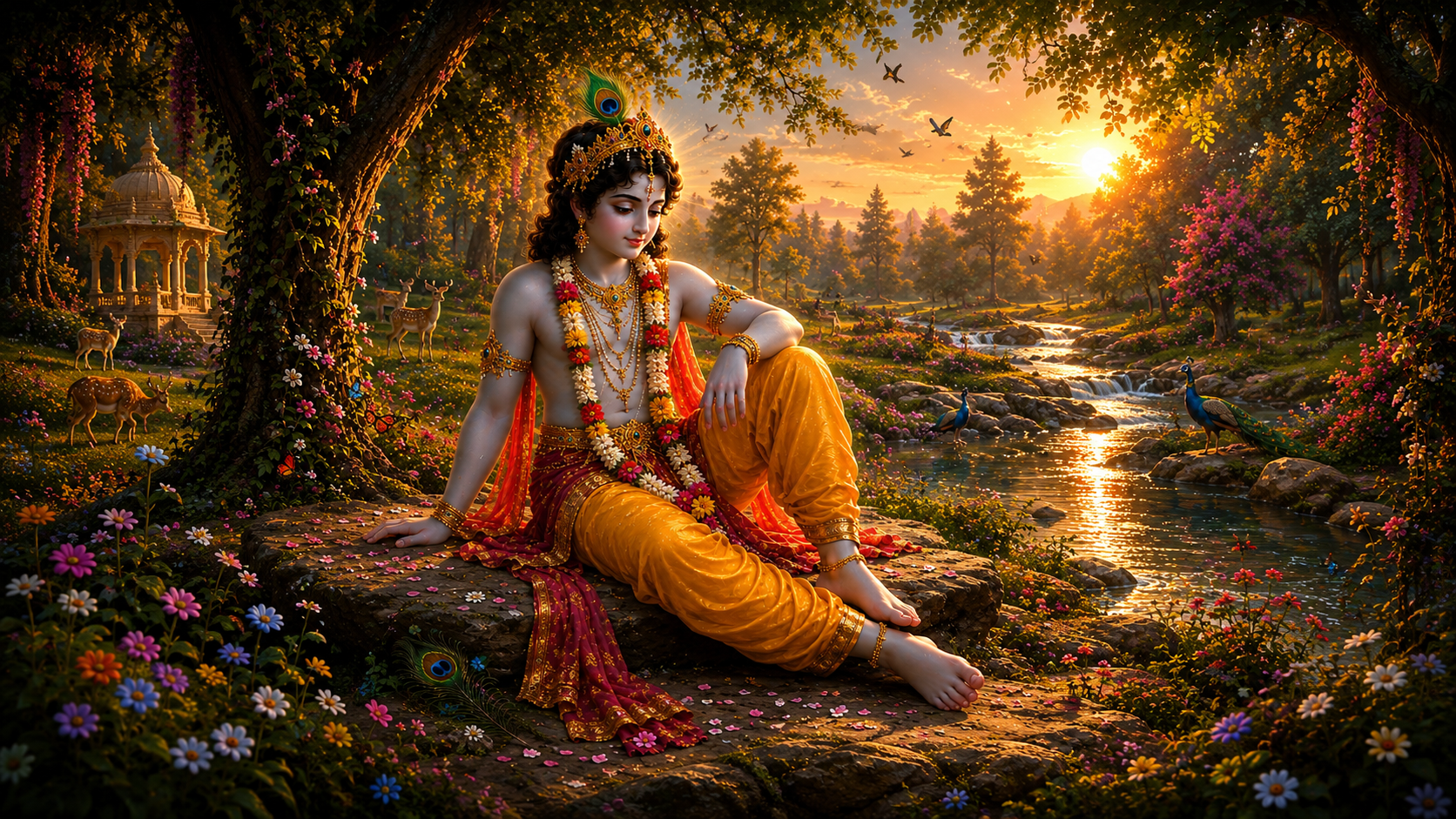
अटति यद् भवान् अह्नि काननं त्रुटिः युगायते त्वाम् अपश्यताम् ।
कुटिल-कुन्तलं श्री-मुखं च ते जडवत् ईक्षतां पक्ष्म-कृत् दृशाम् ॥१५॥
When (यत्) You (भवान्) wander (अटति) in the forest (काननम्) during the daytime (अह्नि), for those not seeing You (त्वाम् अपश्यताम्), even the smallest moment (त्रुटिः) becomes like many millenia (युगायते).
And when we behold (ईक्षताम्) Your beautiful face (श्री-मुखम्) framed by wavy (कुटिल) curly locks (कुन्तलम्), our eyes (दृशाम्) are transfixed upon You (ईक्षताम्) with eyelids (पक्ष्म-कृत्) unmoving (जडवत्).
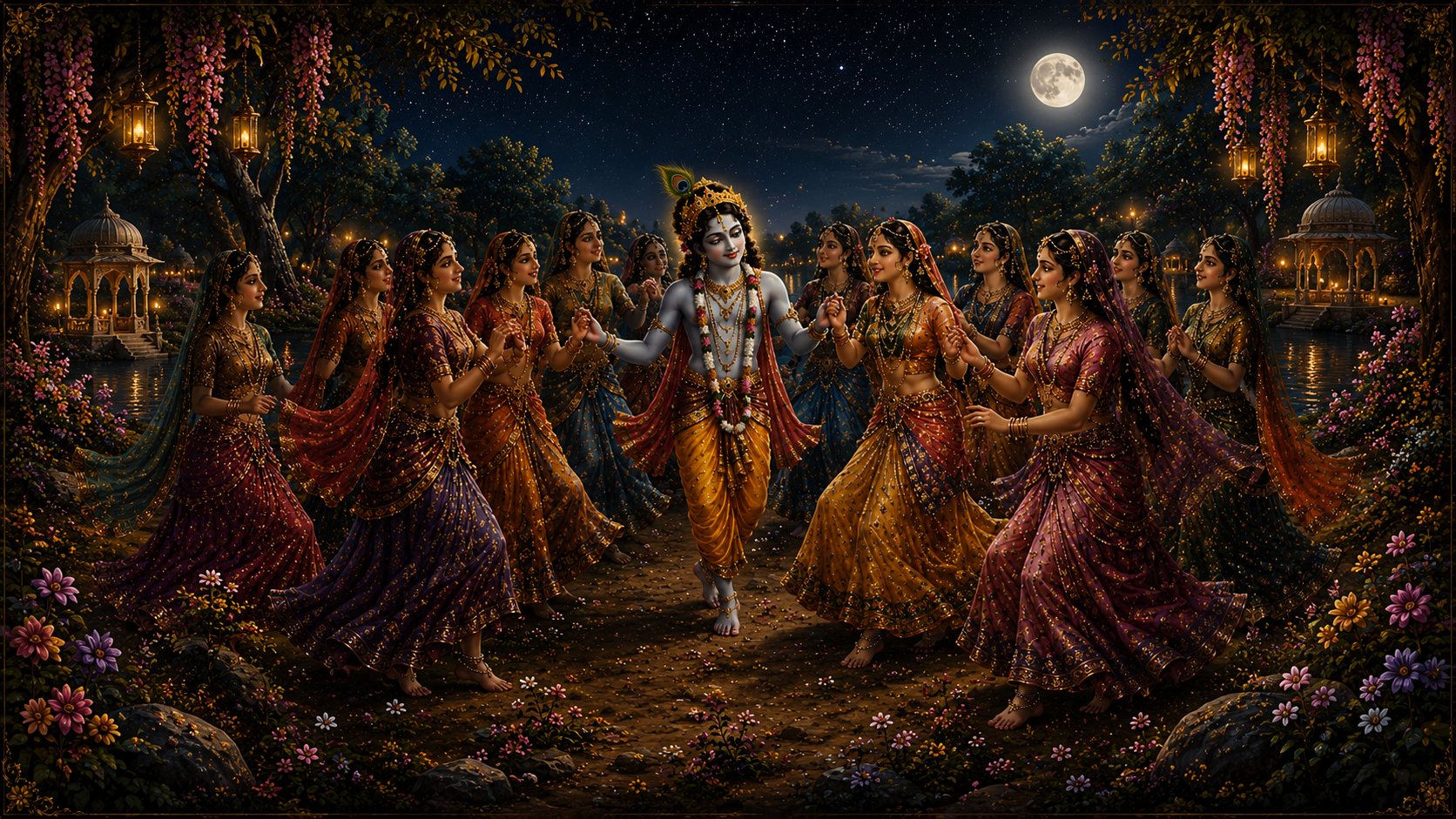
पति-सुत-अन्वय-भ्रातृ-बान्धवान् अति-विलङ्घ्य ते हि अच्युत आगताः ।
गति-विदः तव उद्गीत-मोहिताः कितव योषितः कः त्यजेत् निशि ॥१६॥
O infallible Lord (अच्युत), crossing beyond (अति-विलङ्घ्य) husbands (पति), children (सुत), family ties (अन्वय), brothers (भ्रातृ), and relatives (बान्धवान्), we women (योषितः) have indeed (हि) come (आगताः) to You (ते).
Enchanted (मोहिताः) by Your divine music (उद्गीत), and knowing (विदः) Your ways (गतिः), O deceitful Actor (कितव), who (कः) could give You up (त्यजेत्) in the night (निशि)?
रहसि संविदं हृत्-शय-उदयं प्रहसित-आननं प्रेम-वीक्षणम् ।
बृहत्-उरः-श्रियः वीर वीक्ष्य ते मुहुः अति-स्पृहा मुह्यते मनः ॥१७॥
Your secret conversations (रहसि संविदम्), which awaken (उदयं) the hidden longing of the heart (हृत्-शय), Your smiling face (प्रहसित-आननम्), and Your loving glances (प्रेम-वीक्षणम्),
and beholding (वीक्ष्य) Your broad chest (बृहत्-उरः), the abode of Lakshmi (श्रियः), O heroic Lord (वीर), our minds (मनः) again and again (मुहुः) become overwhelmed (मुह्यते) with intense longing (अति-स्पृहा).
व्रज-वन-ओकसां व्यक्तिः अङ्ग ते वृजिन-हन्त्री अलं विश्व-मङ्गलम् ।
भज मनाक् च नः त्वत्-स्पृहा-आत्मनां स्व-जन-हृत्-रुजां यत् निषूदनम् ॥१८॥
O Beloved One (अङ्ग), Your manifestation (व्यक्तिः) among the dwellers (ओकसाम्) of the forests (वन) of Vraja (व्रज) is fully capable (अलं) of destroying sorrow (वृजिन-हन्त्री) and is auspicious (मङ्गलम्) for the entire universe (विश्व).
Therefore, please show favour (भज) even a little (मनाक् च) to us (नः), whose very beings (आत्मनाम्) long only for You (त्वत्-स्पृहा), for Your appearance is that which destroys (यत् निषूदनम्) the heart-pain (हृत्-रुजाम्) of Your own devotees (स्व-जन).
श्री-शुक उवाच
इति गोप्यः प्र-गायन्त्यः प्र-लपन्त्यः च चित्रधा ।
रुरुदुः सु-स्वरं राजन् कृष्ण-दर्शन-लालसाः ॥१९॥
Shri Shuka (श्री-शुक) said (उवाच):
Thus (इति) the Gopis (गोप्यः), singing forth (प्र-गायन्त्यः) and speaking emotionally (प्र-लपन्त्यः) in many ways (चित्रधा),
wept aloud (रुरुदुः) in sweet voices (सु-स्वरम्), O King (राजन्), intensely longing (लालसाः) for the sight (दर्शन) of Krishna (कृष्ण).
तासाम् आविरभूत् शौरिः स्मयमान-मुख-अम्बुजः ।
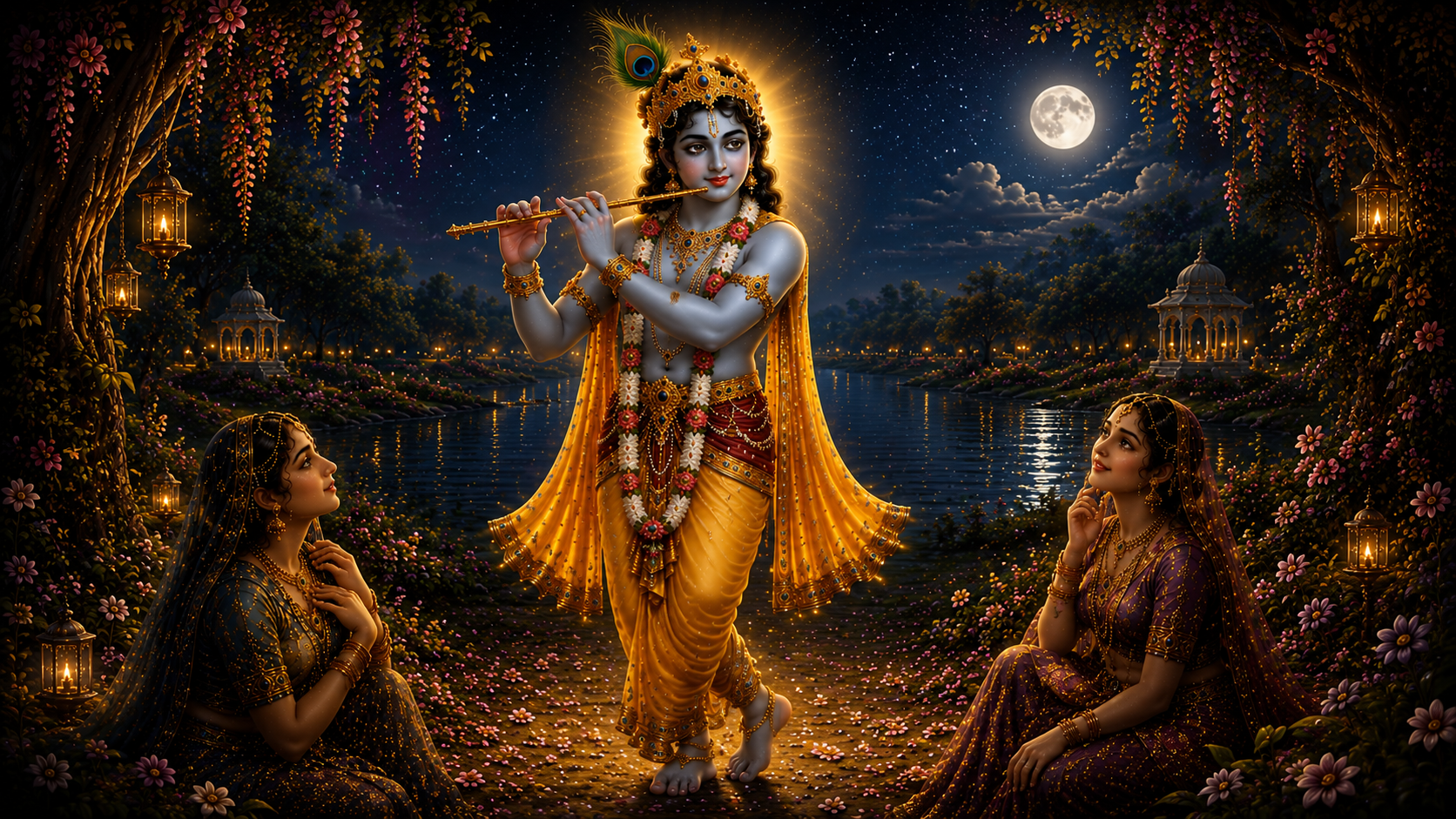
पीत-अम्बर-धरः स्रग्वी साक्षात् मन्मथ-मन्मथः ॥२०॥
Before them (तासाम्) there appeared (आविरभूत्) Krishna, the descendant of Shoora (शौरिः), with a smiling (स्मयमान) lotus-like face (मुख-अम्बुजः),
wearing yellow garments (पीत-अम्बर-धरः), adorned with garlands (स्रग्वी), showing His divine presence (साक्षात्), the enchanter of even the god of Love Kaama himself (मन्मथ-मन्मथः).
॥ इति श्रीमद्-भागवते दशम-स्कन्धे गोपी-गीतम् ॥
Thus ends (इति) the Gopi Gita (गोपी-गीतम्) in the Tenth Skandha (दशम-स्कन्धे) of the Shrimad Bhagavata (श्रीमद्-भागवते).
अथ गोपीगीतम् (with annotation for Singing)
गोप्य ऊचुः
जयति तेऽधिकम् (कृष्ण) जन्मना व्रजः ।
श्रयत इन्दिरा (कृष्ण) साधु तत्र हि ।
दयित दृश्यताम् (कृष्ण) त्वाम् दिदृक्षताम् ।
त्वयि धृतासवः (कृष्ण) त्वाम् विचिन्वते ॥१॥
व्रज-जन-आर्ति-हन् (कृष्ण) वीर-योषिताम् ।
निज-जन-स्मय-(कृष्ण)-ध्वम्सन-स्मित ।
भज सखे भवे (कृष्ण) किङ्करीः स्म नः ।
जल-रुह-आननम् (कृष्ण) चारु दर्शयन् ॥२॥
शरद्-उदाशये (कृष्ण) साधु जात-सत् ।
सरसिजोदर-(कृष्ण)-श्री-मुषा दृशा ।
सुरत-नाथ ते (कृष्ण) शुल्क-दासिकाः ।
वरद निघ्नतः (कृष्ण) नेह किम् वधः ॥३॥
विष-जल-आशयात् (कृष्ण) व्याल-राक्षसात् ।
वर्ष-मारुतात् (कृष्ण) वैद्युत-अनलात् ।
वृष-मयात् भयात् (कृष्ण) विश्वतो-मुखात् ।
वृषभ ते वयम् (कृष्ण) रक्षिताः मुहुः ॥४॥
न खलु गोपिका-(कृष्ण)-नन्दनो भवान् ।
अखिल-देहिनाम् (कृष्ण) अन्तर-आत्म-दृक् ।
विखनस-अर्चितः (कृष्ण) विश्व-गुप्तये ।
सख उदेयिवान् (कृष्ण) सात्वताम् कुले ॥५॥
विरचित-अभयम् (कृष्ण) वृष्णि-वर्य ते ।
शरणम् ईयुषाम् (कृष्ण) सम्सृतेः भयात् ।
कर-सरोरुहम् (कृष्ण) कान्त कामदम् ।
शिरसि धेहि नः (कृष्ण) श्री-कर-ग्रहम् ॥६॥
प्रणत-देहिनाम् (कृष्ण) पाप-कर्शनम् ।
तृण-चर-अनुगम् (कृष्ण) श्री-निकेतनम् ।
फणि-फण-अर्पितम् (कृष्ण) ते पदाम्बुजम् ।
कृणु कुचेषु नः (कृष्ण) कृन्धि हृच्छयम् ॥७॥
मधुरया गिरा (कृष्ण) वल्गु-वाक्यया ।
बुध-मनो-ज्ञया (कृष्ण) पुष्करेक्षण ।
विधि-करीः इमाः (कृष्ण) वीर मुह्यतीः ।
अधर-सीधुना (कृष्ण) आप्याययस्व नः ॥८॥
तव कथा-मृतम् (कृष्ण) तप्त-जीवनम् ।
कविभिर् ईडितम् (कृष्ण) कल्मष-अपहम् ।
श्रवण-मङ्गलम् (कृष्ण) श्रीमत् आततम् ।
भुवि गृणन्ति ते (कृष्ण) भूरिदा जनाः ॥९॥
प्रहसितम् प्रिय (कृष्ण) प्रेम-वीक्षणम् ।
विहरणम् च ते (कृष्ण) ध्यान-मङ्गलम् ।
रहसि सम्विदः (कृष्ण) या हृदि-स्पृशः ।
कुहक नो मनः (कृष्ण) क्षोभयन्ति हि ॥१०॥
चलसि यद् व्रजात् (कृष्ण) चारयन् पशून् ।
नलिन-सुन्दरम् (कृष्ण) नाथ ते पदम् ।
शिल-तृण-अङ्कुरैः (कृष्ण) सीदतीति नः ।
कलिलताम् मनः (कृष्ण) कान्त गच्छति ॥११॥
दिन-परिक्षये (कृष्ण) नील-कुन्तलैः ।
वन-रुह-आननम् (कृष्ण) बिभ्रद् आवृतम् ।
वन-रजस्वलम् (कृष्ण) दर्शयन् मुहुः ।
मनसि नः स्मरम् (कृष्ण) वीर यच्छसि ॥१२॥
प्रणत-कामदम् (कृष्ण) पद्मज-अर्चितम् ।
धरणि-मण्डनम् (कृष्ण) ध्येयम् आपदि ।
चरण-पङ्कजम् (कृष्ण) शन्तमम् च ते ।
रमण नः स्तनेषु (कृष्ण) अर्पय अधिहन् ॥१३॥
सुरत-वर्धनम् (कृष्ण) शोक-नाशनम् ।
स्वरित-वेणुना (कृष्ण) सुष्ठु चुम्बितम् ।
इतर-राग -वि-(कृष्ण)-स्मारणम् नृणाम् ।
वितर वीर नः (कृष्ण) तेऽधर-अमृतम् ॥१४॥
अटति यद् भवान् (कृष्ण) अह्नि काननम् ।
त्रुटि युगायते (कृष्ण) त्वाम् अपश्यताम् ।
कुटिल-कुन्तलम् (कृष्ण) श्री-मुखम् च ते ।
जडवत् ईक्षताम् (कृष्ण) पक्ष्म-कृत् दृशाम् ॥१५॥
पति-सुत-अन्वय-(कृष्ण)-भ्रातृ-बान्धवान् ।
अति-विलङ्घ्य ते (कृष्ण) ह्यच्युत आगताः ।
गति-विदस्तव (कृष्णो) [उ]द्गीत-मोहिताः ।
कितव योषितः (कृष्ण) कस्-त्यजेत् निशि ॥१६॥
रहसि सम्विदम् (कृष्ण) हृत्-शय-ओदयम् ।
प्रहसित-आननम् (कृष्ण) प्रेम-वीक्षणम् ।
बृहत्-उरः-श्रियो (कृष्ण) वीर वीक्ष्य ते ।
मुहुर्-अतिस्पृहा (कृष्ण) मुह्यते मनः ॥१७॥
व्रज-वन-ओकसाम् (कृष्ण) व्यक्तिरङ्ग ते ।
वृजिन-हन्त्रि अलम् (कृष्ण) विश्व-मङ्गलम् ।
भज मनाक् च नः (कृष्ण) त्वत्-स्पृहा-आत्मनाम् ।
स्वजन-हृत्-रुजाम् (कृष्ण) यत् निषूदनम् ॥१८॥
श्री-शुक उवाच
इति गोप्यः प्र-गायन्त्यः प्र-लपन्त्यः च चित्रधा ।
रुरुदुः सु-स्वरं राजन् कृष्ण-दर्शन-लालसाः ॥१९॥
तासाम् आविरभूत् शौरिः स्मयमान-मुख-अम्बुजः ।
पीत-अम्बर-धरः स्रग्वी साक्षात् मन्मथ-मन्मथः ॥२०॥
॥ इति श्रीमद्भागवते दशमस्कन्धे गोपीगीतम् ॥
अथ गोपीगीतम् (Original/Moola)
गॊप्य ऊचुः
जयति तेऽधिकं जन्मना व्रजः श्रयत इन्दिरा साधु तत्र हि ।
दयित दृश्यतां त्वां दिदृक्षतां त्वयि धृतासवस्त्वा विचिन्वते ॥१॥
व्रजजनार्तिहन् वीरयोषितां निजजनस्मयध्वंसनस्मित ।
भजसखे भवे किङ्करीः स्म नो जलरुहाननं चारु दर्शयन् ॥२॥
शरदुदाशये साधु जातसत्सरसिजोदरश्रीमुषा दृशा ।
सुरतनाथ ते शुल्कदासिका वरद निघ्नतो नेह किं वधः ॥३॥
विषजलाशयाद् व्यालराक्षसाद् वर्षमारुताद्वैद्युतानलात् ।
वृषमयाद्भयाद् विश्वतोमुखाद् वृषभ ते वयं रक्षिता मुहुः ॥४॥
न खलु गोपिकानन्दनो भवानखिलदेहिनामन्तरात्मदृक् ।
विखनसार्चितो विश्वगुप्तये सख उदेयिवान् सात्वतां कुले ॥५॥
विरचिताभयं वृष्णिवर्य ते शरणमीयुषां संसृतेर्भयात् ।
करसरोरुहं कान्त कामदं शिरसि धेहि नः श्रीकरग्रहम् ॥६॥
प्रणतदेहिनां पापकर्शनं तृणचरानुगं श्रीनिकेतनम् ।
फणिफणार्पितं ते पदाम्बुजं कृणु कुचेषु नः कृन्धि हृच्छयम् ॥७॥
मधुरया गिरा वल्गुवाक्यया बुधमनोज्ञया पुष्करेक्षण ।
विधिकरीरिमा वीर मुह्यतीरधरसीधुनाऽऽप्याययस्व नः ॥८॥
तव कथामृतं तप्तजीवनं कविभिरीडितं कल्मषापहम् ।
श्रवणमङ्गलं श्रीमदाततं भुवि गृणन्ति ते भूरिदा जनाः ॥९॥
प्रहसितं प्रिय प्रेमवीक्षणं विहरणं च ते ध्यानमङ्गलम् ।
रहसि संविदो या हृदिस्पृशः कुहक नो मनः क्षोभयन्ति हि ॥१०॥
चलसि यद् व्रजाच्चारयन् पशून् नलिनसुन्दरं नाथ ते पदम् ।
शिलतृणाङ्कुरैः सीदतीति नः कलिलतां मनः कान्त गच्छति ॥११॥
दिनपरिक्षये नीलकुन्तलैर्वनरुहाननं बिभ्रदावृतम् ।
वनरजस्वलं दर्शयन् मुहुः मनसि नः स्मरं वीर यच्छसि ॥१२॥
प्रणतकामदं पद्मजार्चितं धरणिमण्डनं ध्येयमापदि ।
चरणपङ्कजं शन्तमं च ते रमण नस्तनेष्वर्पयाधिहन् ॥१३॥
सुरतवर्धनं शोकनाशनं स्वरितवेणुना सुष्ठु चुम्बितम् ।
इतररागविस्मारणं नृणां वितर वीर नः तेऽधरामृतम् ॥१४॥
अटति यद्भवानह्नि काननं त्रुटि युगायते त्वामपश्यताम् ।
कुटिलकुन्तलं श्रीमुखं च ते जडवदीक्षतां पक्ष्मनुद्दृशाम् ॥१५॥
पतिसुतान्वयभ्रातृबान्धवानतिविलङ्घ्य ते ह्यच्युतागताः ।
गतिविदस्तवोद्गीतमोहिताः कितव योषितः कस्त्वजेन्निशि ॥१६॥
रहसि संविदं हृच्छयोदयं प्रहसिताननं प्रेमवीक्षणम् ।
बृहदुरःश्रियो वीर वीक्ष्य ते मुहुरतिस्पृहा मुह्यते मनः ॥१७॥
व्रजवनौकसां व्यक्तिरङ्ग ते वृजिनहन्त्र्यलं विश्वमङ्गलम् ।
भज मनाक् च नस्त्वत्स्पृहात्मनां स्वजनहृद्रुजां यन्निषूदनम् ॥१८॥
श्रीशुक उवाच
इति गोप्यः प्रगायन्त्यः प्रलपन्त्यश्च चित्रधा ।
रुरुदुः सुस्वरं राजन् कृष्णदर्शनलालसाः ।॥१९॥
तासामाविरभूच्छौरिः स्मयमानमुखाम्बुजः ।
पीताम्बरधरः स्रग्वी साक्षान्मन्मथमन्मथः ॥२०॥
॥ इति श्रीमद्भागवते दशमस्कन्धे गोपीगीतम् ॥
Moola verified with:
- मन्त्रस्तोत्रसङ्ग्रहः “Mantra Stotra Sangraha Collection of Suktas and Stotras”, Published by Vishva Madhwa Maha Parishat
- स्तोत्रमालिका (नित्यपठनीयवैष्णवस्तोत्रसङ्ग्रहः), Published by Dr. Vyasanakere Prabhanjanacharya, श्री-व्यास-मध्व-संशोधन-प्रतिष्ठानम्j
/Raghunath Rao/ “Do your Best … and leave the Rest … “
(All mistakes mine – all credit to Gurus and Acharyas )
|| sarvaṁ śrī kṛṣṇārpanamastu ||