हरि सर्वोत्तम । वायु जीवोत्तम | श्री गुरुभ्यो नमः
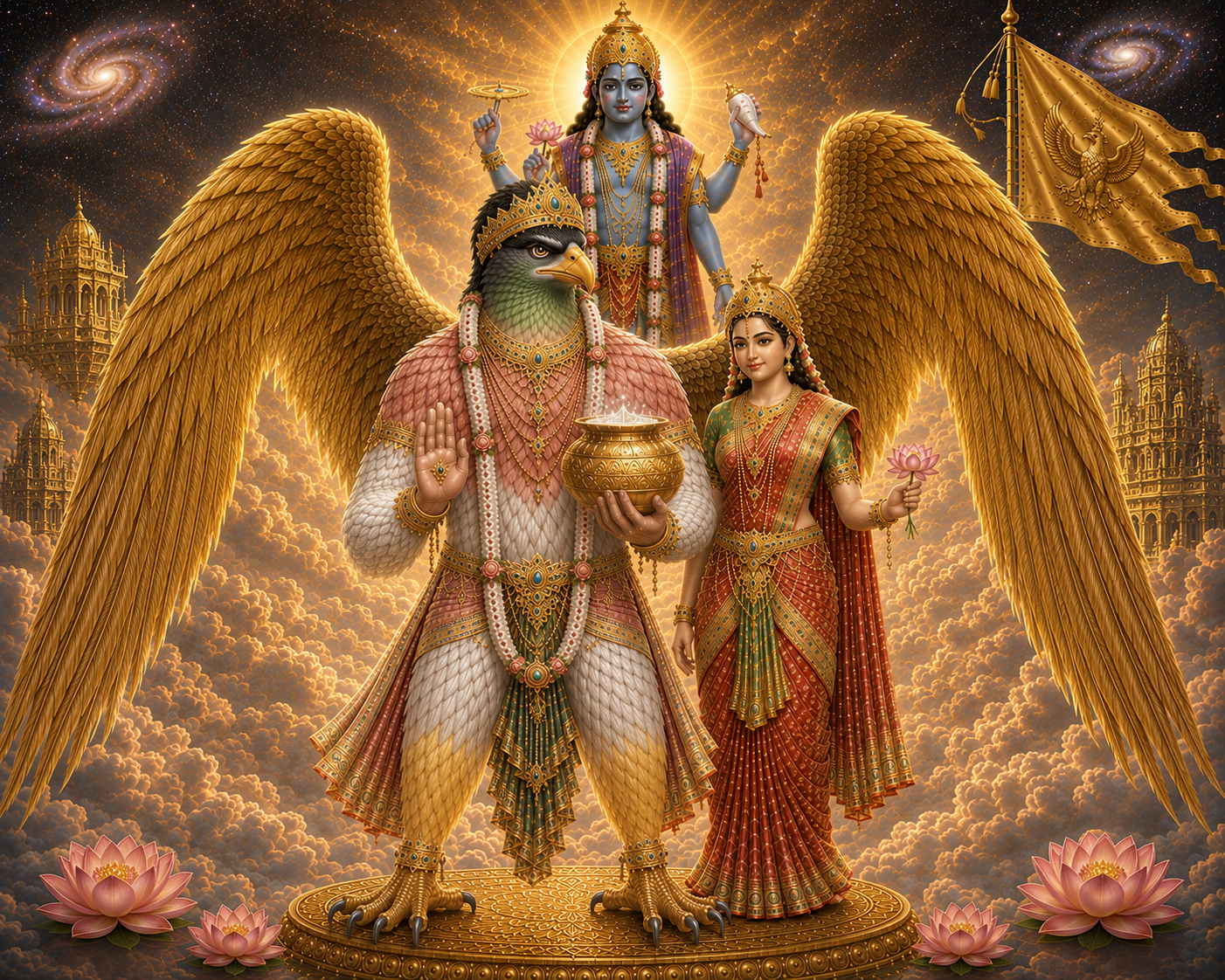
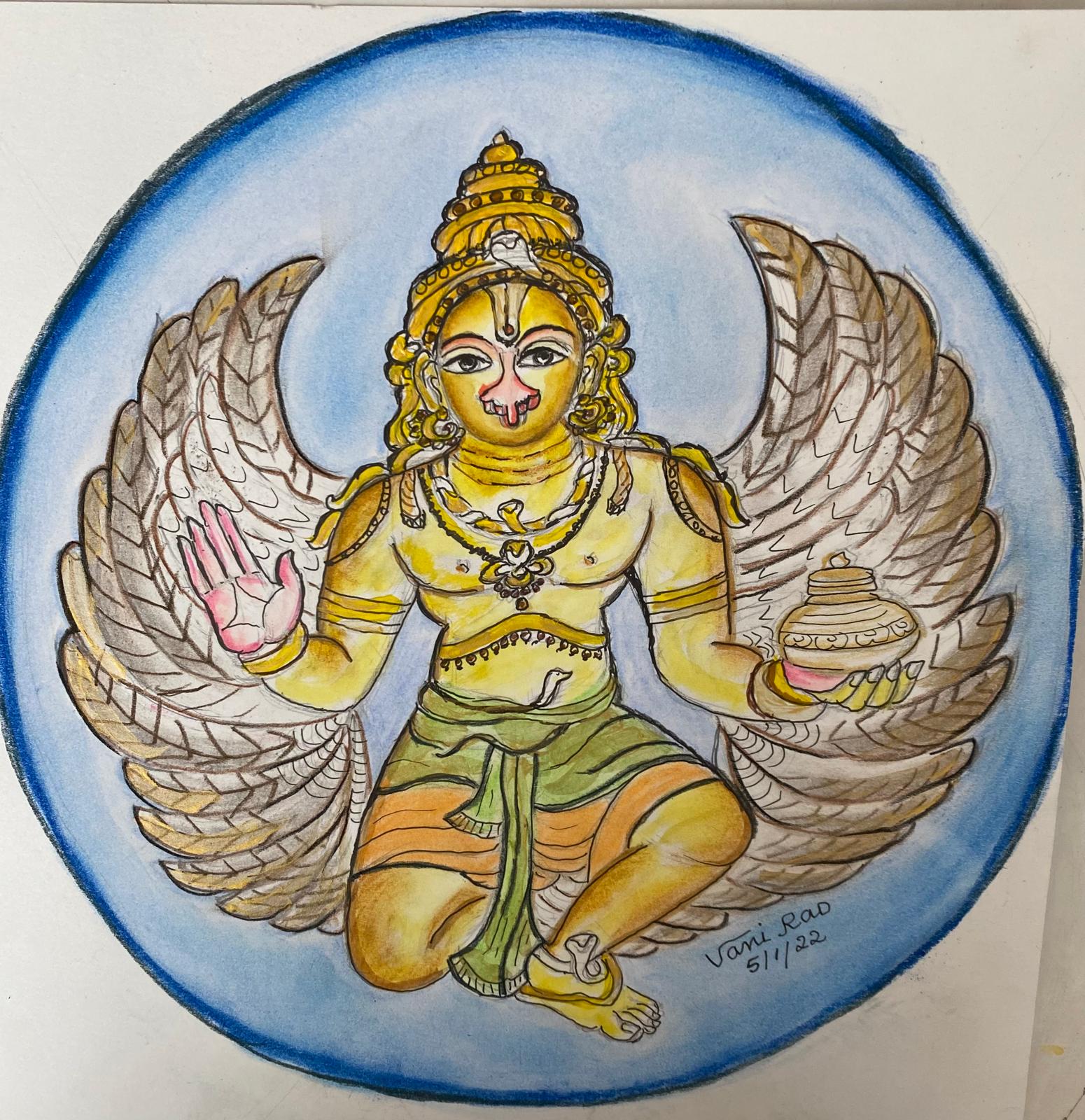
गरुडः सर्वदा ध्येयः सुधापूर्णं हिरण्मयम् ।
दधानः कुम्भमभयम् पीतः शुक्लोऽरुणो हरित् ॥
Garuda (गरुडः) is always (सर्वदा) to be meditated upon (ध्येयः),
holding (दधानः) a golden (हिरण्मयम्) pot (कुम्भम्) filled (पूर्णम्) with nectar (सुधा),
granting protection with the gesture of fearlessness (अभयम्),
with colors yellow (पीतः), white (शुक्लः), reddish (अरुणः), and green (हरित्).
- This shloka which is chanted in Daily pooja is a condensed version of the three verses given by Acharya Madhva in TantraSaaraSangraha as explained further below.
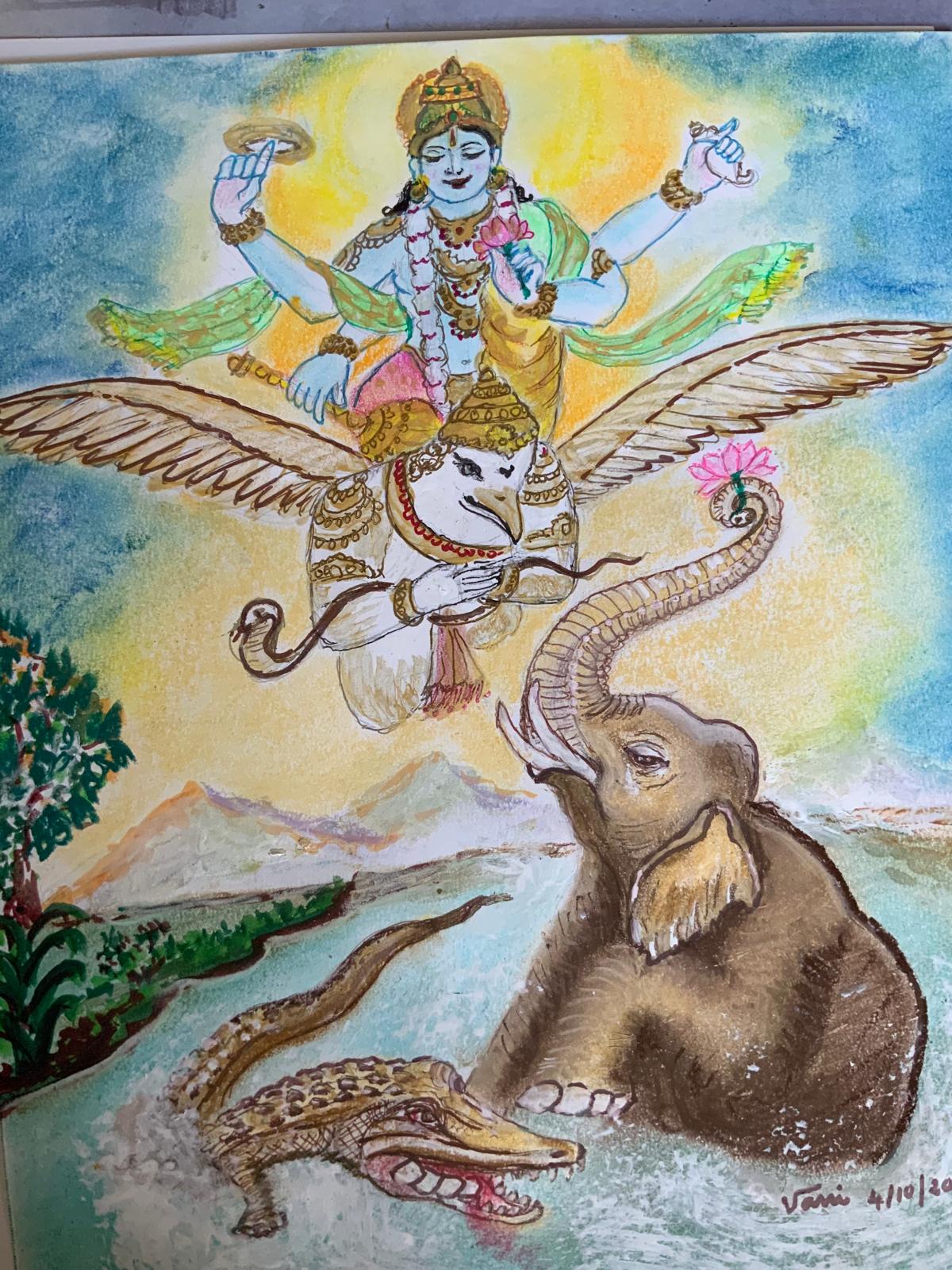
- The pot of nectar of (अमृत कलश) refers to the ambrosia of immortality that is heavily guarded by the Devas. Garuda heroically retrieves it to free his mother Vinata who was enslaved by Kadru, the mother of Naagas. While transporting it, he shows supreme self-restraint by not partaking any himself. Lord Vishnu observes this and grants Garuda boons: (1) immortality (even without drinking Amruta); and (2) a position above Lord Himself (as the emblem on His flagstaff). Garuda then “offers” a return “boon” to the Lord – Who chooses to bless Garuda as His vehicle thus also clarifying the hierarchy of Lord over devotee.
- पीत–शुक्ल–अरुण–हरित — refers to the colors of this Divine Eagle as yellow up to the knees, white up to the navel, reddish up to the neck, and green up to the ears – and additionally black above (see below).
- Author’s interpretation: The five colors are reminiscent of the five cosmic elements: yellow for Earth, white for Water, red for Fire, green for Air, and black for Space. Garuda has mastery over all these as demonstrated when he single-handedly defeats the Devas in the above heroic episode. This also aligns with the hierarchy of souls (जीव तारतम्य) since Garuda is above the presiding deities (अभिमानि देवता) of all these in the manifest universe.
Expanded Verses from TantraSaaraSangraha (4.82-84):
व्यस्तपक्षितारौ च स्वाहान्तो गारुडो मनुः ।
कश्यपोऽस्य मुनिर्ध्येयो सुधापूर्णं हिरण्मयम् ॥ ८२ ॥
दधानः कुम्भमभयं पीतशुक्लारुणो हरित् ।
कृष्णश्चाजानुतो नाभेः कण्ठात् कादन्त एव च ॥ ८३ ॥
प्रियायुक् पुरतो विष्णोः पक्षतुण्डसमन्वितः ।
जङ्गमस्थावरविषहृदयं सर्वकामदः ॥ ८४ ॥
The Mantra (मनुः) of Garuda (गारुडः),
is the reverse arrangement (व्यस्त) of syllables पक्षि + तार,
ending in Svaha (स्वाहा-अन्तः),
having Kashyapa (कश्यपः) as its seer (अस्य मुनिः).
He is to be meditated upon (ध्येयः),
holding (दधानः) a golden (हिरण्मयम्) pot (कुम्भम्) filled (पूर्णम्) with nectar (सुधा),
displaying the gesture of fearlessness (अभयम्).
His form is yellow (पीतः) up to the knees (आ-जानुतः),
white (शुक्लः) to the navel (नाभेः),
reddish (अरुणः) to the neck (कण्ठात्),
green (हरित्) from the neck (कम्) to the teeth (आ-दन्तः),
and black (कृष्णः) [further above].
Accompanied by his beloved (प्रियायुक्),
he is positioned before (पुरतः) Lord Vishnu (विष्णोः),
endowed (समन्वितः) with wings (पक्ष) and beak (तुण्ड).
Such is (अयम्) the remover (हृत्) of the effects of poison (विष)
from moving (जङ्गम) and stationary (स्थावर) beings
and grants all desired blessings (सर्व-काम-दः).
- व्यस्त-पक्षि-तारौ + स्वाहा-अन्तः results in ॐ क्षिप स्वाहा (reversed arrangement of प+क्षि (bird) and तार=ॐ, ending in स्वाहा).
- Kashyapa is not only the seer for the Mantra but also Garuda’s father.
- Garuda is explicitly described with wings and a beak (पक्ष-तुण्ड-समन्वितः) confirming the physical bird-form is for meditation.
- प्रियायुक् indicates that Garuda is accompanied by his beloved consort Sauparni.
- सर्व-काम-दः should be interpreted as granting all legitimate desires in accordance with his role as Lord’s delegate.
/Raghunath Rao/ “Do your Best … and leave the Rest … “
(All mistakes mine – all credit to Gurus and Acharyas )
|| sarvaṁ śrī kṛṣṇārpanamastu ||