हरि सर्वोत्तम । वायु जीवोत्तम | श्री गुरुभ्यो नमः
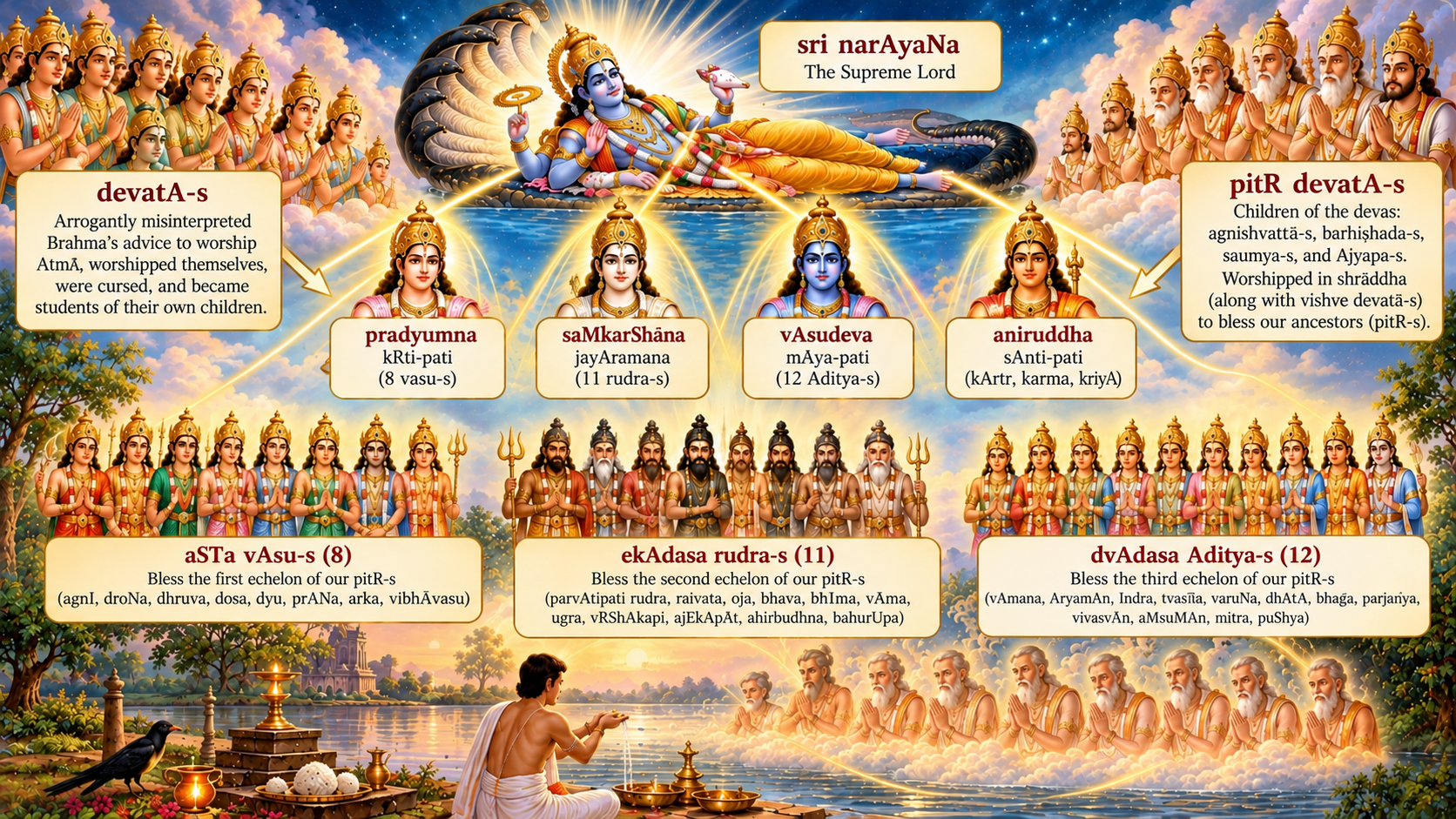
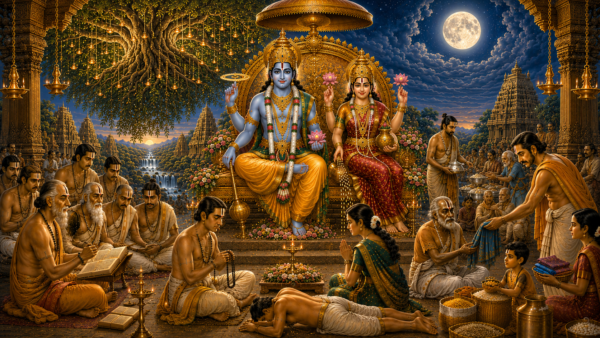
पितृ श्राद्ध is much more than just a remembrance of our ancestors. It is a prescribed act of धर्म through which we serve the Lord, honor our ancestors, and thus receive His grace. So पितृ कर्म must be performed with knowledge of the Lord’s presence in the entire process.
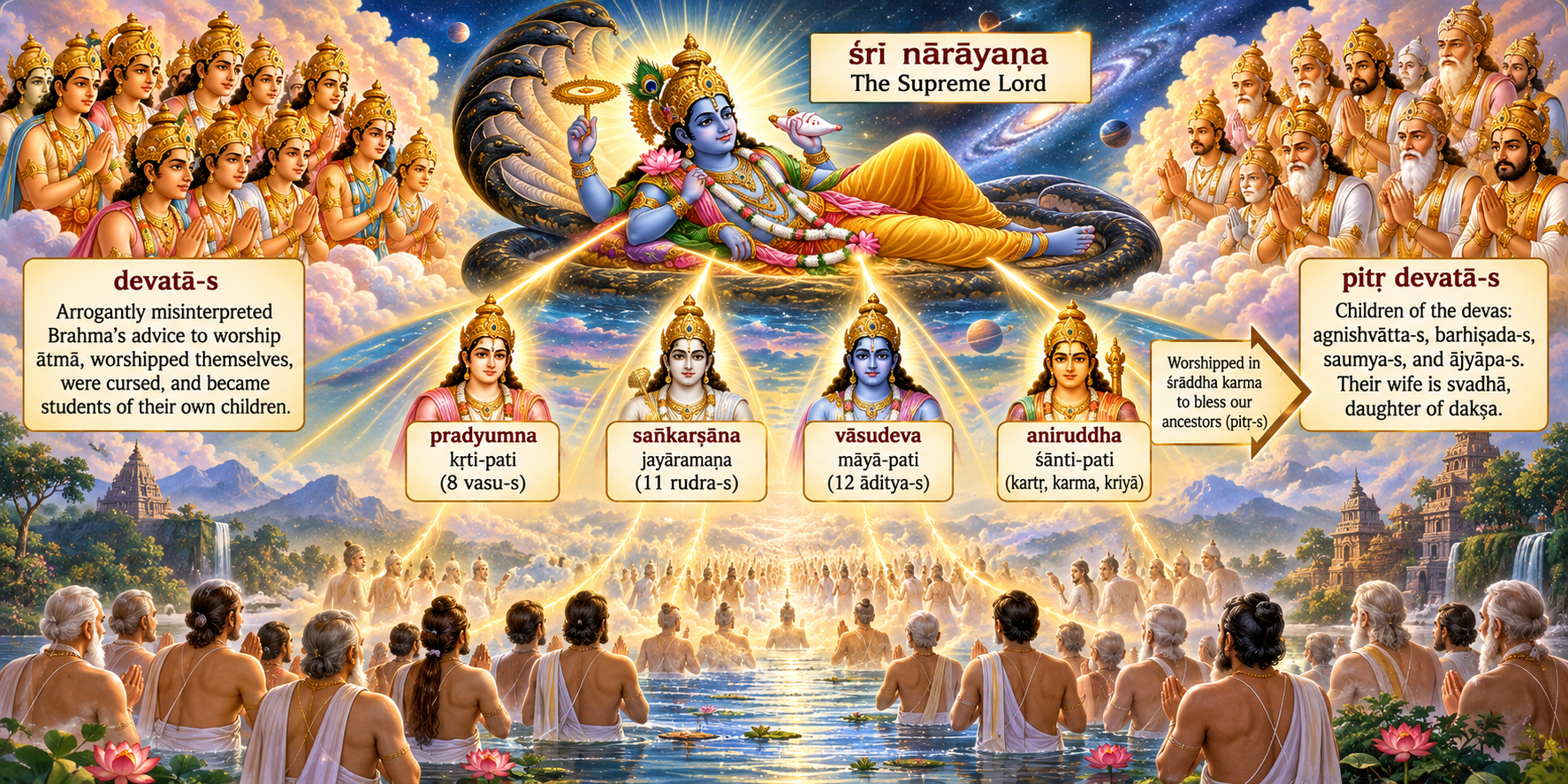
The food we offer, the पितृ देवता-s who preside over the ancestral lineages, the Brahmins who receive the offerings (even if symbolically made of धर्बे), the person performing the ritual, and the acts that constitute the ritual are all pervaded and governed by श्रीमन नारायण. The Lord manifests through प्रद्युम्न in the eight वसु-s, सङ्कर्षण in the eleven रुद्र-s, वासुदेव in the twelve आदित्य-s, and अनिरुद्ध in the performer, the act, and the ritual itself.
However, these पितृ देवताः are not to be confused with पितृ-s, i.e .our ancestors or मानुष्य पितृ-s. पितृ देवताः are worshipped in श्राद्ध ceremony (along with विश्वे देवताः), and through them the Lord blesses our ancestors. They are actually children of the देव-s: अग्निष्वात्त-s, बर्हिषद-s, सौम्य-s, and आज्यप-s.
The story goes like this:
- Arrogantly misinterpreting Brahma’s advice to worship आत्मा, the देवताः started worshipping themselves (!) instead of The One and Only Independent Perfect and Supreme आत्मा = परमात्मा.
- So Brahma cursed them to lose all their knowledge. Upon repentance from the देवताः, he said the only way out was for them to become students of their own children.
- So the देवता-पुत्र-s, now sitting in the elevated seat of a teacher, taught their fathers, the देवताः, and even addressed them as पुत्र or children! The देवताः thus regained their knowledge but then complained to Brahma about this wrong and humiliating address by their sons.
- But Brahma justified that this was correct since now the देवताः were indeed ज्ञान-पुत्र-s of their own sons after having received their उपदेश. Thus the देवता-पुत्र-s became देवता-पितृ-s!
- Brahma then blessed the newly elevated sons of देवताः to become देवता-पितृ-s for the whole world and gave them the privilege of being worshipped in श्राद्ध कर्म to bless our ancestors or पितृ-s.
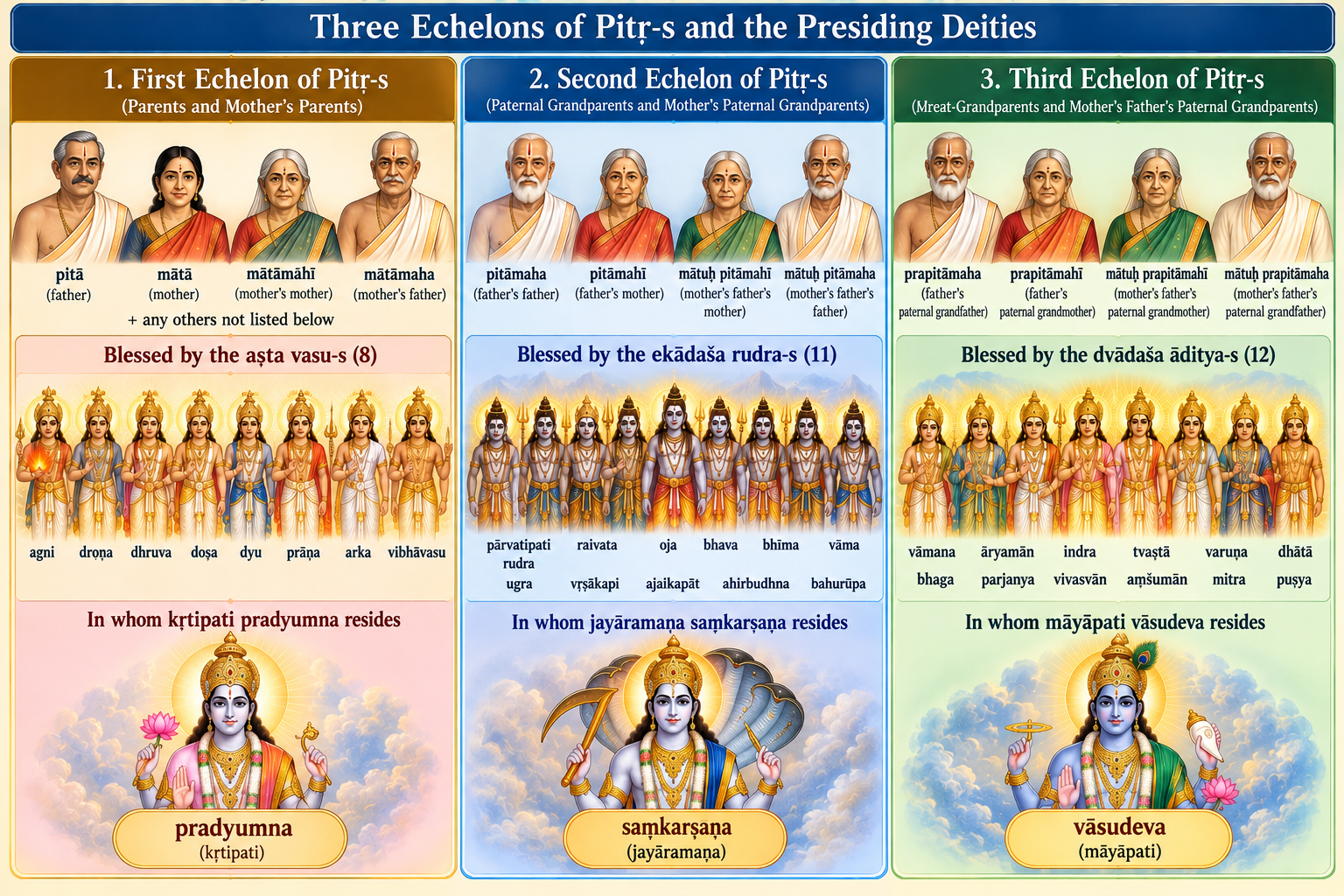
In our श्राद्ध and तर्पण rituals we offer our prayers through these पितृ देवताः, not directly to ancestors (more details in HariKathamrutaSaara-14 पितृगण संधि):
- The first echelon of our पितृ-s are पिता + माता (parents), मातामह + मातामही (mother’s parents) + all others not listed below. They are blessed by the अष्ट वसु-s = अग्नि, द्रोण, ध्रुव, दोष, द्यु, प्राण, अर्क, विभावसु, in whom कृतिपति प्रद्युम्न resides.
- The second echelon of our पितृ-s are पितामह + पितामही (paternal grandparents) and मातुः पितामह + मातुः पितामही (mother’s paternal grandparents). They are blessed by the एकादश रुद्र-s = पार्वतिपति रुद्र, रैवत, ओज, भव, भीम, वाम, उग्र, वृषाकपि, अजैकपात्, अहिर्बुध्न, बहुरूप, in whom जयारमण सङ्कर्षण resides.
- And the third and last echelon of our पितृ-s are प्रपितामह + प्रपितामही (father’s paternal grandparents) and मातुः प्रपितामह + मातुः प्रपितामही (mother’s father’s paternal grandparents). They are blessed by the द्वादश आदित्य-s = वामन, आर्यमान्, इन्द्र, त्वष्टा, वरुण, धाता, भग, पर्जन्य, विवस्वान्, अंशुमान्, मित्र, पुष्य, in whom मायापति वासुदेव resides.
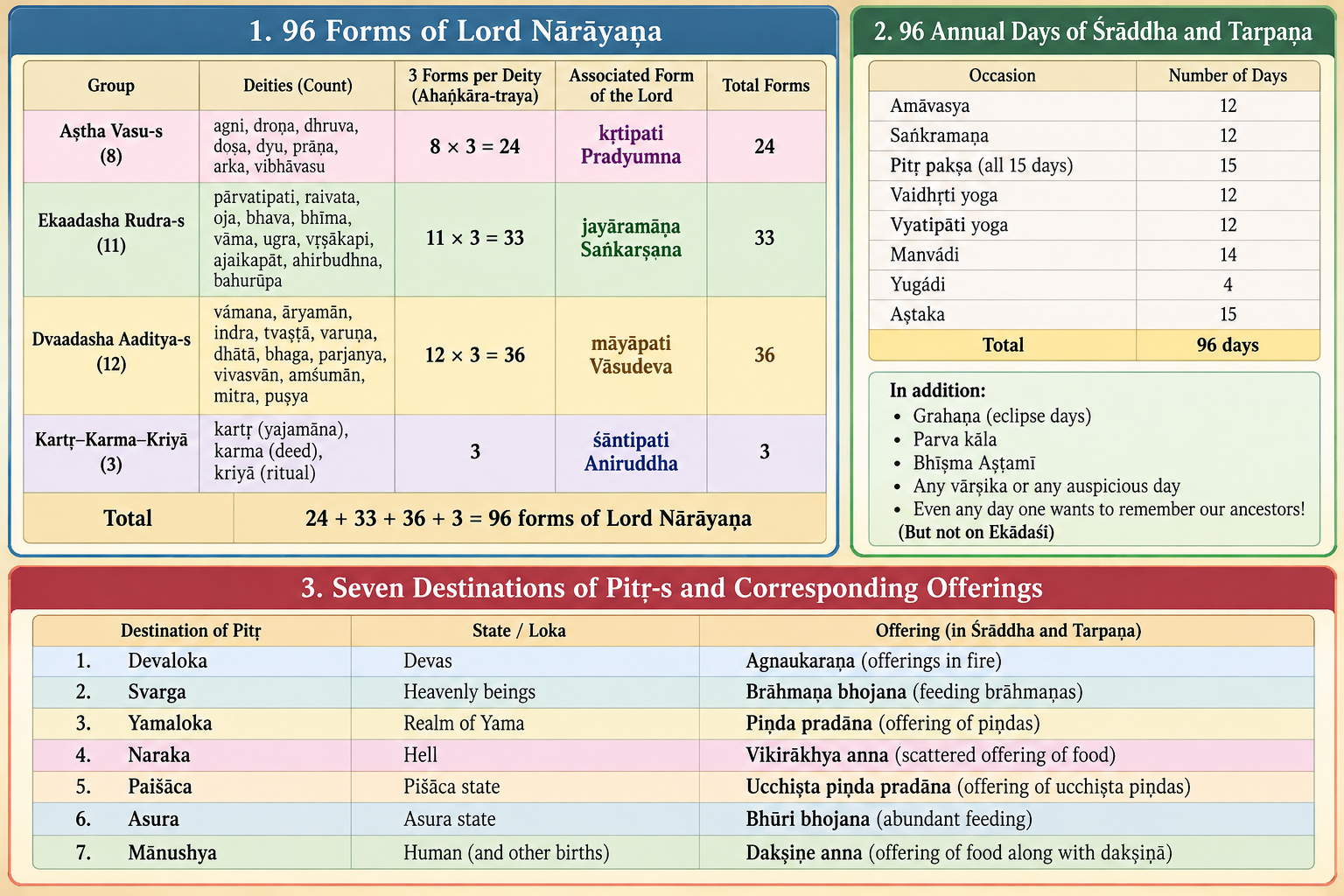
- The number 96 षण्णवति comes to us in two ways re: श्राद्ध and तर्पण:
- Considering each form to have 3 instances of अहङ्कार-त्रय (वैकारिक, तैजस and तामस), the expansion of 8 वसु-s, 11 रुद्र-s and 12 आदित्य-s comes to 93. Specifically, 8 × 3 = 24 forms of प्रद्युम्न, 11 × 3 = 33 forms of सङ्कर्षण, and 12 × 3 = 36 forms of वासुदेव. Adding कर्तृ (यजमान), कर्म (deed), and क्रिया (ritual), in which अनिरुद्ध resides, brings the total to 96 forms of Lord नारायण.
- The 96 annual days of श्राद्ध and तर्पण = 12 अमावास्या, 12 सङ्क्रमण, 15 days of पितृ पक्ष, 12 वैधृति योग, 12 व्यतीपात योग, 14 मन्वादि, 4 युगादि, 15 अष्टका. In addition ग्रहण, पर्वकाल, भीष्माष्टमी, any वार्षिक. Note that तर्पण can be given on any auspicious day, at holy places, or even any day just to remember our ancestors (not एकादशी).
- Depending on where the पितृ is residing amongst 7 locations = देवलोक, स्वर्ग, यमलोक, नरक, पैशाच, असुर, मानुष्य there are 7 kinds of offerings = अग्नौकरण, ब्राह्मण भोजन, पिण्डप्रदान, विकिराख्य अन्न, उच्छिष्ट पिण्डप्रदान, भूरि भोजन, दक्षिणे अन्न.
- At the end, Lord Himself is अन्न (Food), अन्नद (Provider of the food) and अन्नाद (the One who swallows the entire world during महाप्रलय). Note that “अन्न” also refers to the whole universe = प्रकृति.
Ultimately it is about समर्पण
The ninety-six forms described above remind us that the entire श्राद्ध is ultimately an offering to the one Supreme Lord, who is present throughout it all.
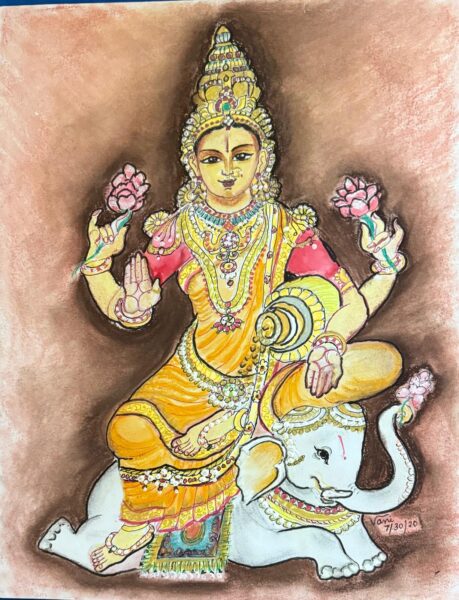
This is why the offering is made to लक्ष्मीजनार्दन, the Lord who is the अन्तर्यामी of all beings and the स्वामी of श्राद्ध.
We do not regard the पितृ देवतास् as independent dispensers of the fruits of our offerings. Rather, through the divine hierarchy, the Lord accepts the service and grants the appropriate blessings to our ancestors – and us!
जगन्नाथ दास teaches us to perform पितृ कर्म with ज्ञानानुसन्धान—a conscious understanding of the Lord’s presence—and with कृष्णार्पण बुद्धि, offering the entire act to Him.
The importance of श्राद्ध, therefore, lies in fulfilling our duty to our departed parents and ancestors in accordance with शास्त्र, while recognizing that all our actions depend upon the Lord’s grace. We perform the prescribed rites faithfully, without selfish expectation, remembering that the Lord alone is स्वतन्त्र and that He accepts the service of His devotees and blesses the ancestors (and thereby us and our progeny) through His divine forms.
Thus, पितृ श्राद्ध unites three inseparable duties: reverence for our ancestors, faithful observance of धर्म, and devotion to श्री लक्ष्मी जनार्दन. By performing it with proper understanding, devotion, and attitude of कृष्णार्पण, we fulfill our ancestral obligations while directing the entire act toward its ultimate purpose—service to श्री हरि, the Supreme स्वतन्त्र Lord.
/Raghunath Rao/ “Do your Best … and leave the Rest … “
(All mistakes mine – all credit to Gurus and Acharyas )
|| sarvaṁ śrī kṛṣṇārpanamastu ||