हरि सर्वोत्तम । वायु जीवोत्तम | श्री गुरुभ्यो नमः
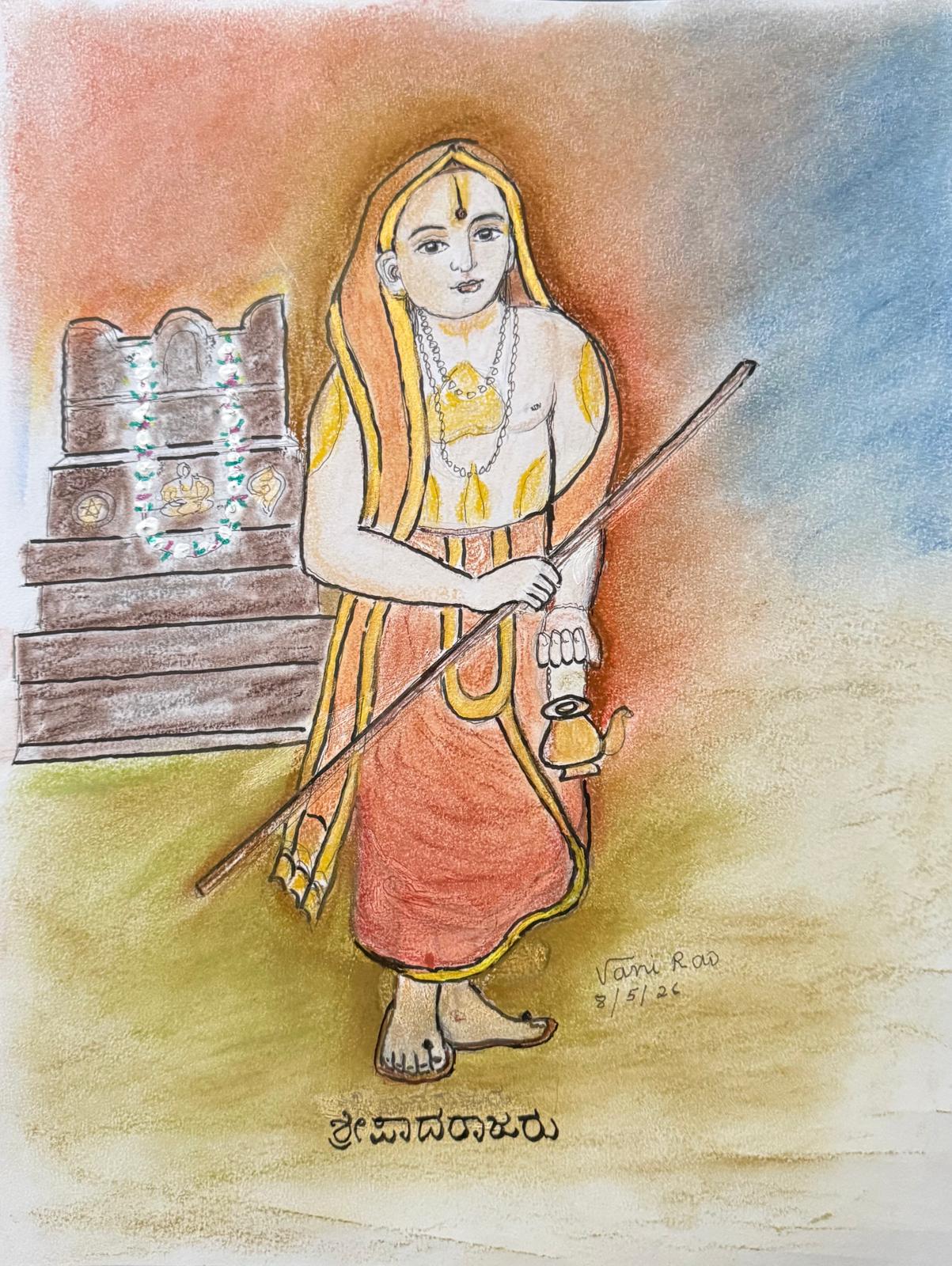
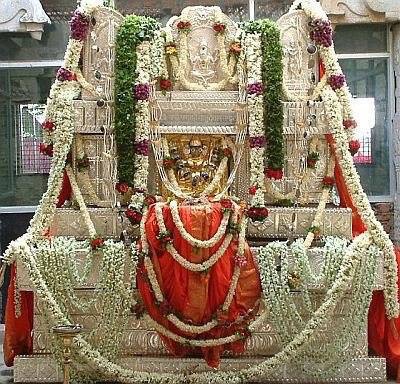
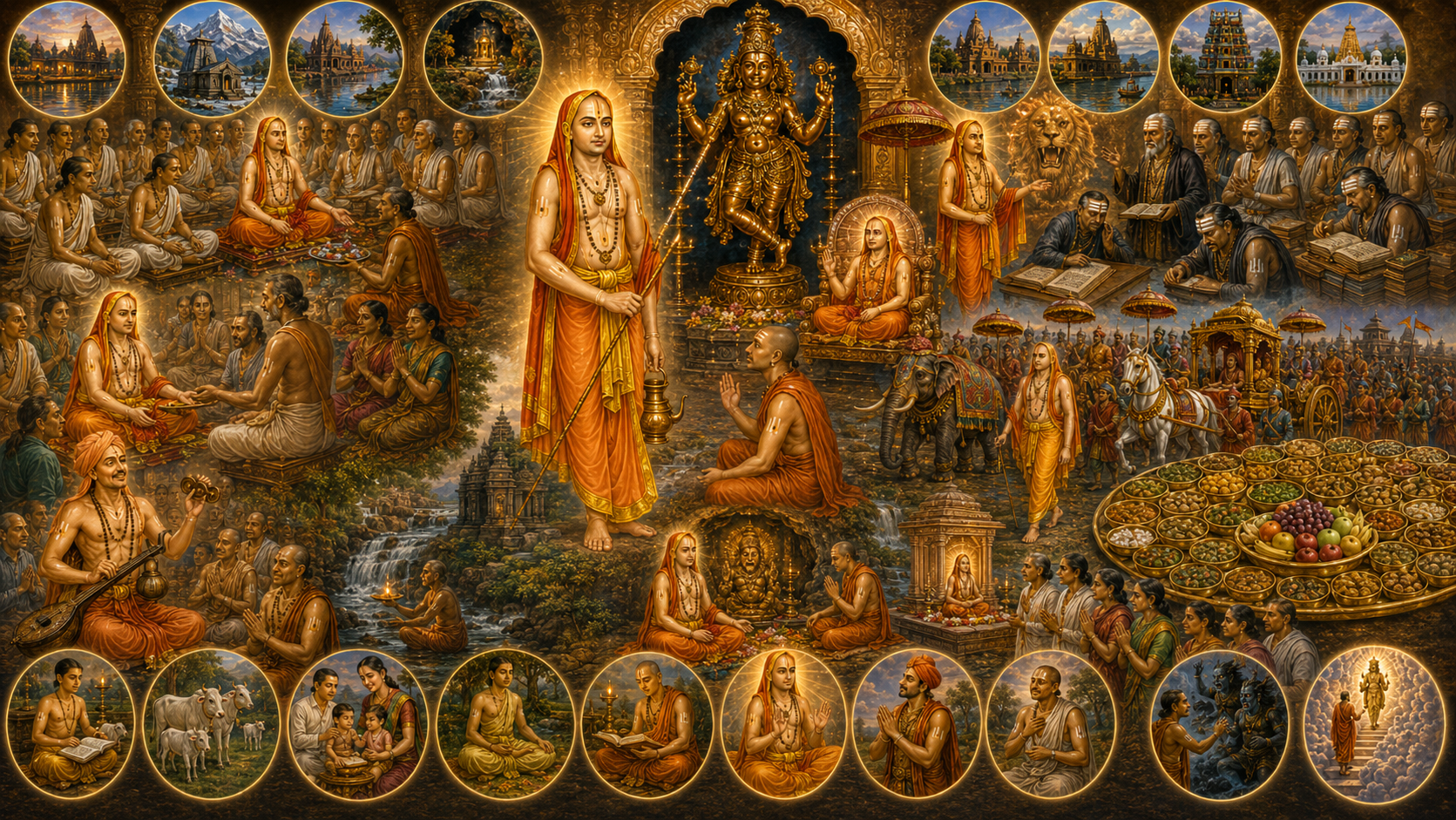
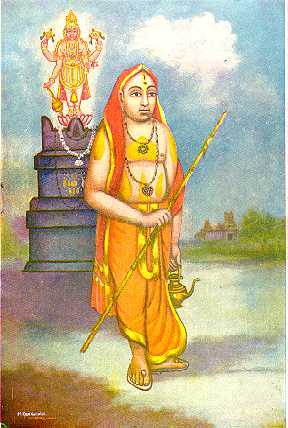
Shripaadaraajaru (1404–1502) is revered in the Maadhva tradition as an avataara of Dhruva Maharaja, and is one of its most influential aachaaryas. A revered and undefeated master of the shaastra-s, he was the vidyaaguru of renowned Shri Vyaasaraaja. His life was marked by extraordinary scholarship, unwavering devotion to Lord Hari, innumerable miracles, and boundless compassion for devotees. He also revived the great Daasa Sahitya tradition introduced by Sri Madhvacharya, making the profound truths of vyaasa-saahitya accessible to ordinary devotees through simple yet deeply philosophical songs bearing the ankita “Ranga Vittala.” He is fondly remembered as “Daasa Pitaamaha” since he was paramaguru to stalwarts such as Purandara Daasa and Kanaka Daasa. More information on him can be found in the references BELOW.
The following Shripaadaraaja Pancharatna Malika, composed by his illustrious disciple Shri Vyaasaraaja Tirtharu, is his heartfelt garland of five gems of verses celebrating the glory, scholarship, compassion, and divine greatness of this revered Guru.
श्रीपादराज पञ्चरत्नमालिका (Meaning)
(श्री व्यासराज कृत)
वन्दे श्री-पाद-राजं रुचिर-तम-हृदयं पूजित-श्री-सहायम् ।
निर्धूत-अशेष-हेयं निभृत-शुभ-चयं भूमि-देव-अभिगेयम् ।
विप्रेभ्यः दत्त-देयं निज-जन-सदयं खण्डित-अशेष-मायम् ।
निष्ट्यूत-स्वर्ण-कायं बहु-गुण-निलयं वादि-सङ्घैः अजेयम् ॥१॥
I bow (वन्दे) to Sri Padaraja (श्रीपादराजम्), who
has an exceedingly radiant heart (रुचिर-तम-हृदयम्);
worships Lord Narayana (पूजित) served by Lakshmi (श्री-सहायम्);
is completely (अशेष) devoid of (निर्धूत) every defect and worldly attachment (हेयम्);
is fully filled (निभृत) with an abundance of auspicious qualities (शुभ-चयम्);
is praised (अभिगेयम्) by learned Brahmanas (भूमि-देव);
bestows worthy gifts (दत्त) to Brahmanas (विप्रेभ्यः) as they deserve (देयम्) ;
is ever compassionate (सदयम्) toward His devotees (निज-जन);
has completely (अशेष) refuted (खण्डित) Maayavaada and other wrong philosophies (मायम्);
has a form (कायम्) that shines like refined (निष्ट्यूत) gold (स्वर्ण);
is the abode (निलयम्) of many exalted virtues (बहु-गुण);
and remains unconquered by assemblies of disputants (वादी-सङ्घैः-अजेयम्).
- Shripaadaraja’s generosity toward worthy devotees is celebrated in many authentic accounts. Even today mere darshana of his brindaavana at Mulabagal bestows blessings on devotees who bring their troubles and needs to him.
क्षुभ्ध-वादी-करीन्द्र वादी-पटली-कुम्भ-च्छटा भेदन
प्रौढ प्राभव-तर्क-सङ्घ-नखर-श्रेणी-विलास-उज्ज्वलः ।
गोपीनाथ-महेन्द्र-शेखर-लसत्-पाद-स्थल-आवास-कृत् ।
पायात् मां भव-घोर-कुञ्जर-भयात् श्री-पाद-राट् केसरी ॥२॥
May Shripaadaraaja (श्रीपादराट्), the mighty lion (केसरी),
who tears apart (भेदन) the frontal globes (कुम्भ-च्छटा) of the mighty elephants (करीन्द्र) that are assemblies (पटली) of agitated (क्षुभ्ध) opponents in debate (वादी) ;
whose radiant (उज्ज्वलः) splendour (विलास) shines through rows (श्रेणी) of sharp claws (नखर), representing profound mastery (प्रौढ) of scriptural disciplines such as meemamsa (प्राभव), logic (तर्क), and allied sciences (सङ्घ);;
who dwells (आवास-कृत्) at the resplendent (लसत्) lotus feet (पाद-स्थल) of the most exalted (शेखर) summit (महेन्द्र) called Lord Gopinatha (गोपीनाथ)
protect (पायान्) me (माम्) from the fear (भयात्) of the dreadful (घोर) elephant (कुञ्जर) of worldly bondage (भव);
- प्राभव refers to the Prabhakara school of philosophy as an example but Shripaadaraajaru’s mastery was over the poorva meemaamsa as a whole, including other schools such as Kumarila’s.
- नखर-श्रेणी (“rows of claws”) poetically represents his penetrating command of the shaastra-s.
- Lord Gopinatha is the paTTa-devaru (main deity) of Sripadaraja Matha and is presented as the supreme refuge by Vyaasarajaru even while glorifying the Guru, thus affirming that greatness rests in unwavering devotion to the lotus feet of Lord Hari.
बिभ्राणं क्षौम-वासः कर-धृत-वलयं हार-केयूर-काञ्ची-
ग्रैवेय-स्वर्ण-माला मणि-गण-खचित अनेक भूषा-प्रकर्षम् ।
भुञ्जानं षष्टि-शाकं हय-गज-शिभिका-अनर्घ्य शय्या-रथाढ्यम् ।
वन्दे श्री-पाद-राजं त्रि-सवनम्-अनिशम् घोर-दारिद्र्य-शान्त्यै ॥३॥
I bow (वन्दे) to Shripaadaraaja (श्रीपादराजम्), who
is adorned (बिभ्राणम्) with fine silk (क्षौम) garments (वासः), hands (कर) bearing (धृत) bracelets (वलयम्), garlands (हार), armlets (केयूर), golden waist ornaments (काञ्ची), golden necklace (स्वर्ण-माला) and neck band (ग्रैवेय) , and many (अनेक) exquisite (प्रकर्षम्) ornaments (भूषा) studded (खचित) with collections of (गण) pearls and gem-beads (मणि);
partakes (भुञ्जानम्) of offerings of sixty varieties (षष्टि) of vegetable dishes (शाकम्);
is attended by horses (हय), elephants (गज), palanquins (शिभिका), priceless couches (अनर्घ्य-शय्या), magnificent chariots (रथाढ्यम्), and other royal honours;
when prayed to without fail (अनिशम्) at the three daily sandhyaa periods (त्रि-सवनम्) is the remover (शान्त्यै)) of dreadful (घोर) poverty (दारिद्र्य).
- The royal splendour described here reflects praaradbha being experienced since he is avataara of Dhruva Raaja, not due to attachment to worldly luxury. Though served by King Saluva Narasimha and surrounded by many regal honours, Shripaadaraajaru remained a true ascetic wholly devoted to Lord Hari.
- Some renditions end with त्रिभुवनविदितं घॊरवादिप्रशान्त्यै emphasizing Shripaadarajaru is renowned throughout the three worlds (त्रिभुवन-विदितम्)
as he tamed (प्रशान्त्यै) even the fiercest opponents (घोर-वादी).
यत्-वृन्दावन-सेवया सु-विमलां विद्यां पशून् सन्ततिं
ध्यानं ज्ञानम्-अनल्प-कीर्ति-निवहं प्राप्नोति सौख्यं जनः ।
तं वन्दे नरसिंह-तीर्थ-निलयं श्री-व्यास-राट्-पूजितम् ।
ध्यायन्तं मनसा नृसिंह-चरणं श्री-पाद-राजं गुरुम् ॥४॥
By serving (सेवया) whose (यद्) Brindaavana (वृन्दावन), devoted people (जनः) obtain (प्राप्नोति)
pure and unblemished (सु-विमलां) learning (विद्याम्);
cows and other prosperity (पशून्);
worthy progeny (सन्ततिम्);
steadfast meditation (ध्यानम्);
true spiritual wisdom (ज्ञानम्);
immense (अनल्प) abundance (निवहम्) of glory (कीर्ति);
and lasting well-being (सौख्यम्).
I bow (वन्दे) to that (तं) Guru (गुरुम्) Sri Padaraja (श्रीपादराजं), who
has taken residence (निलयम्) at Narasimha teertha (नरसिंह-तीर्थ);
is worshipped (पूजितम्) by Sri Vyaasaraaja (श्री-व्यासराट्);
and continually meditates (ध्यायन्तम्) with his mind (मनसा) upon the feet (चरणम्) of Lord Narasimha (नृसिंह).
- The blessings listed here must be understood at both the worldly and the spiritual levels. For example, पशु ordinarily refers to cattle and material prosperity, but can also be understood as गावः representing Vedic wisdom and spiritual wealth. Similarly, विद्या could be ordinary learning (अपरा-विद्या) or knowledge of the Supreme Lord (परा-विद्या).
- It is said that Shripaadarajaru prayed to Lord Gopinaatha to bless some devotees who could not travel to Kaashi and the next day heavy rains brought Ganga herself to Narasimha teertha. A dip in this holy pond is equivalent to a holy bath in the divine Ganga at Kaashi.
- The second half of this 4th verse is popular for dhyaana (meditation) of Shripaadaraajaru including before accepting teertha-prasaada.
काशी केदार माया करि-गिरि मधुरा द्वारका वेङ्कटाद्रि
श्रीमुश्ण-क्षेत्र-पूर्व त्रि-भुवन-विलसत्-पुण्य-भूमि-निवासः ।
गुल्मादि-व्याधि-हर्ता गुरु-गुण-निलयो भूत-भेताल-भेदी ।
भूयात् श्री-पाद-राजो निखिल-शुभ-तति-प्राप्तये सन्ततं नः ॥५॥
May Shripaadaraaja (श्रीपादराजः) who
has sacred (पुण्य) abode (निवासः) on earth (भूमि) with the sanctity of holy places like Kaashi (काशी), Kedara (केदार), Gayaa (माया), Ahobala (करिगिरि), Mathura (मधुरा), Dvaaraka (द्वारका), Venkataadri (वेङ्कटाद्रि), Srimushnam (श्रीमुश्ण) and many other (पूर्व) holy places (क्षेत्र), renowned (विलसत्) in all three worlds (त्रिभुवन);
is the remover (हर्ता) of diseases (व्याधि) including tumors (गुल्म) and other severe ailments (आदि);
is the abode (निलयः) of exalted (गुरु) virtues (गुण);
is the remover (भेदी) of ghosts and evil spirits (भूत-भेताल);
May he grant (भूयात्) that we (नः) continually (सन्ततं) obtain (प्राप्तये) all possible (निखिल) auspicious (शुभ) blessings (तति).
- The verse extols the sanctity of Shripaadaraja’s Brindaavana which has the spiritual merit traditionally associated with celebrated pilgrimage centres.
- The prayer concludes by seeking all auspicious blessings (निखिल-शुभ-तति), culminating in the highest auspiciousness, i.e. steadfast devotion to Lord Hari and, by His grace alone, Moksha.
इति श्रीव्यासराजविरचितं श्रीपादराजपञ्चरत्नमालिका
Thus ends (इति) the garland of five gems in praise of Shripaadaraaja composed (विरचितम्) by Shri Vyaasaraaja (श्री-व्यासराज).
References
- Official history: About (Dhruvaraja) Sripadaraja
- Explanation (Kannada audio) by Kesava Rao Tadipatri
- Detailed English translation by Sri Hunsur Sriprasad
- Sripadaraja Stotragalu with Kannada Translation – C. Narayana Rao
- Shripaadaraaja Overview by Vijaya Galagali
श्रीपादराज पञ्चरत्नमालिका (Chanting)
(श्री व्यासराज कृत)

वन्दे श्री-पाद-राजं रुचिर-तम-हृदयं पूजित-श्री-सहायम् ।
निर्धूत-अशेष-हेयं निभृत-शुभ-चयं भूमि-देव-अभि-गेयम् ।
विप्रेभ्यो-दत्त-देयं निज-जन-सदयं खण्डित-अशेष-मायम् ।
निष्ट्यूत-स्वर्ण-कायं बहु-गुण-निलयं वादि-सङ्घैर्-अजेयम् ॥१॥
क्षुभ्ध-वादी-करीन्द्र वादी-पटली-कुम्भ-च्छटा-भेदन
प्रौढ प्राभव-तर्क-सङ्घ-नखर-श्रेणी-विलास-उज्ज्वलः ।
गोपीनाथ-महेन्द्र-शेखर-लसत्-पाद-स्थल-आवास-कृत् ।
पायान्-मां भव-घोर-कुञ्जर-भयाच्छ्री-पाद-राट्-केसरी ॥२॥
बिभ्राणं क्षौम-वासः कर-धृत-वलयं हार-केयूर-काञ्ची-
ग्रैवेय-स्वर्ण-माला मणि-गण-खचित-अनेक-भूषा-प्रकर्षम् ।
भुञ्जानं षष्टि-शाकं हय-गज-शिभिका-अनर्घ्य-शय्या-रथाढ्यम् ।
वन्दे श्री-पाद-राजं त्रि-सवनम्-अनिशं घोर-दारिद्र्य-शान्त्यै ॥३॥
यद्-वृन्दावन-सेवया सु-विमलां विद्यां पशून् सन्ततिं
ध्यानं ज्ञानम्-अनल्प-कीर्ति-निवहं प्राप्नोति सौख्यं जनः ।
तं वन्दे नरसिंह-तीर्थ-निलयं श्री-व्यास-राट्-पूजितम् ।
ध्यायन्तं मनसा नृसिंह-चरणं श्री-पाद-राजं गुरुम् ॥४॥
काशी केदार माया करि-गिरि मधुरा द्वारका वेङ्कटाद्रि
श्रीमुश्ण-क्षेत्र-पूर्व त्रि-भुवन-विलसत्-पुण्य-भूमि-निवासः ।
गुल्मादि-व्याधि-हर्ता गुरु-गुण-निलयो भूत-भेताल-भेदी ।
भूयाच्छ्री-पाद-राजो निखिल-शुभ-तति-प्राप्तये सन्ततं नः ॥५॥
इति श्रीव्यासराजविरचितं श्रीपादराजपञ्चरत्नमालिका
॥ श्रीकृष्णार्पणमस्तु ॥
श्रीपादराज पञ्चरत्नमालिका (Moola)
(श्री व्यासराज कृत)
वन्दॆ श्रीपादराजं रुचिरतमहृदयं पूजितश्रीसहायं
निर्धूताशॆषहॆयं निभृतशुभचयं भूमिदॆवाभिगॆयम् ।
विप्रॆभ्यॊदत्तदॆयं निजजनसदयं खण्डिताशॆषमायं
निष्ट्यूतस्वर्णकायं बहुगुणनिलयं वादिसङ्घैरजॆयम् ॥१॥
क्षुभ्धाद्वादिकरीन्द्र वादिपटलीकुम्भच्छटा भॆदन
प्रौढ प्राभवतर्कसन्घनखरश्रॆणीविलासॊज्ज्वलः ।
गॊपीनाथमहॆन्द्रशॆखरलसत्पादस्थलावासकृत् ।
पायान्मां भवघॊरकुञ्जरभयाच्छ्रीपादराट्कॆसरी ॥२॥
बिभ्राणं क्षौमवासः करधृतवलयं हारकॆयूरकान्ची
ग्रैवॆयस्वर्णमाला मणिगणखचितानॆक भूषाप्रकर्षम् ।
भुंजानं षष्टिशाकं हयगजशिभिकानर्घ्य शय्यारथाढ्यं
वन्दॆ श्रीपादराजं त्रिसवनमनिशम् घोरदारिद्र्यशान्त्यै ॥३॥
यद्बृन्दावन सॆवया सुविमलां विद्यां पशून् सन्ततिं
ध्यानां ज्ञानमनल्पकीर्तिनिवहं प्राप्नॊति सौख्यं जनः ।
तं वन्दॆ नरसिंहतीर्थ निलयं श्री व्यासराट् पूजितं
ध्यायन्तं मनसा नृसिंहचरणं श्रीपादराजं गुरुम् ॥४॥
काशी कॆदार माया करिगिरि मधुरा द्वारका वॆङ्कटाद्रि
श्रीमुश्णक्षॆत्रपूर्व त्रिभुवन विलसत्पुण्यभूमीनिवासः ।
गुल्मादिव्याधिहर्ता गुरुगुणनिलयो भूतभॆतालभॆदी
भूयाच्छ्रीपादराजो निखिलशुभतति प्राप्तये सन्ततं नः ॥५॥
इति श्रीव्यासराजविरचितं श्रीपादराजपञ्चरत्नमालिका
॥ श्रीकृष्णार्पणमस्तु ॥
/Raghunath Rao/ “Do your Best … and leave the Rest … “
(All mistakes mine – all credit to Gurus and Acharyas )
|| sarvaṁ śrī kṛṣṇārpanamastu ||