हरि सर्वोत्तम । वायु जीवोत्तम | श्री गुरुभ्यो नमः
पूर्वपीठिका (Background)
The purpose of a Vedic sukta or mantra is to invoke a divine force via a deity (देवता) in order to protect and guide the individual who chants it (मननात् त्रायते इति मन्त्रः). A specific form of this deity is to be visualized to guide the meditation with recitation & repetition of the sukta or mantra.
However, mantras are not composed—not by humans, not by the invoked deities, nor even by the Lord Paramaatma Himself. Since the Vedas (and the knowledge they embody) exist eternally, they are termed अपौरुषेय. This is in contrast to all other texts which are पौरुषेय compositions including Puraana-s, Itihaasa-s (Raamayana, Mahaabharata), and other Smṛti texts (“remembered” tradition).
Consequently, Vedic mantra-s and sukta-s are only revealed to a ऋषि or sage who “Sees” them in a deep state of realization. Reciting the name before chanting the mantra not only acknowledges the Seer and respects the lineage (परम्परा) thereof, but also gives insight into the context in which the Seer received the mantra and thus understand it better.
मन्यु सूक्त (Manyu Sukta)
The Manyu Sukta has been widely misunderstood as a hymn merely addressing anger (क्रोध) or Rudra as the presiding deity. This has led to ambiguity regarding its purpose, tone, and application.
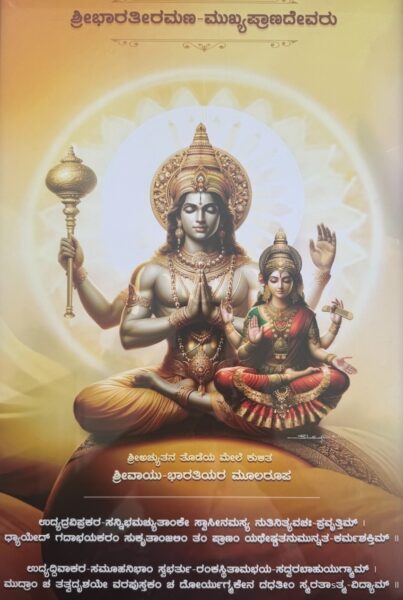
Mukhyapraana (Vaayu), the chief servant of Lord Almighty, took his third descension as Acharya Madhva to restore a clear understanding of Vedic scriptures and Indian history. In his magnum opus, Mahabharata Tatparya Nirnaya, Acharya covers a vast range of topics in his simple and direct style, including recollections from his own previous descensions as Hanuman and Bheema.
Specifically, Acharya Madhva decisively removes the confusion about “Who is Manyu?” by recalling the incident where he confronts Duhshaasana (दुःशासन) in the Kurukshetra war during his own second descension as Bheema:
स्मर नरसिम्ह-भगवन् तम् ईश्वरं स मन्यु सूक्तं च ददर्श भक्त्या ।
यस्ते मन्यो इति अतो नारसिम्हं सोमं तस्मै च अर्पयच्छोणिताख्यं ॥ म.भा.ता.नि १७.१२८ ॥
Remembering (स्मर) Lord Narasimha (नरसिम्ह भगवन्), that Supreme Lord (तम् ईश्वरम्),
he (सः) beheld (ददर्श) the Manyu Sukta (मन्यु सूक्तम्) with devotion (भक्त्या);
“he who [worships] Manyu” thus (यस्ते मन्यो इति), he offered (अर्पयत्)
to Narasimha (नारसिम्हम्) the Soma offering (सोमम्) called “blood” (शोणिताख्यम्).
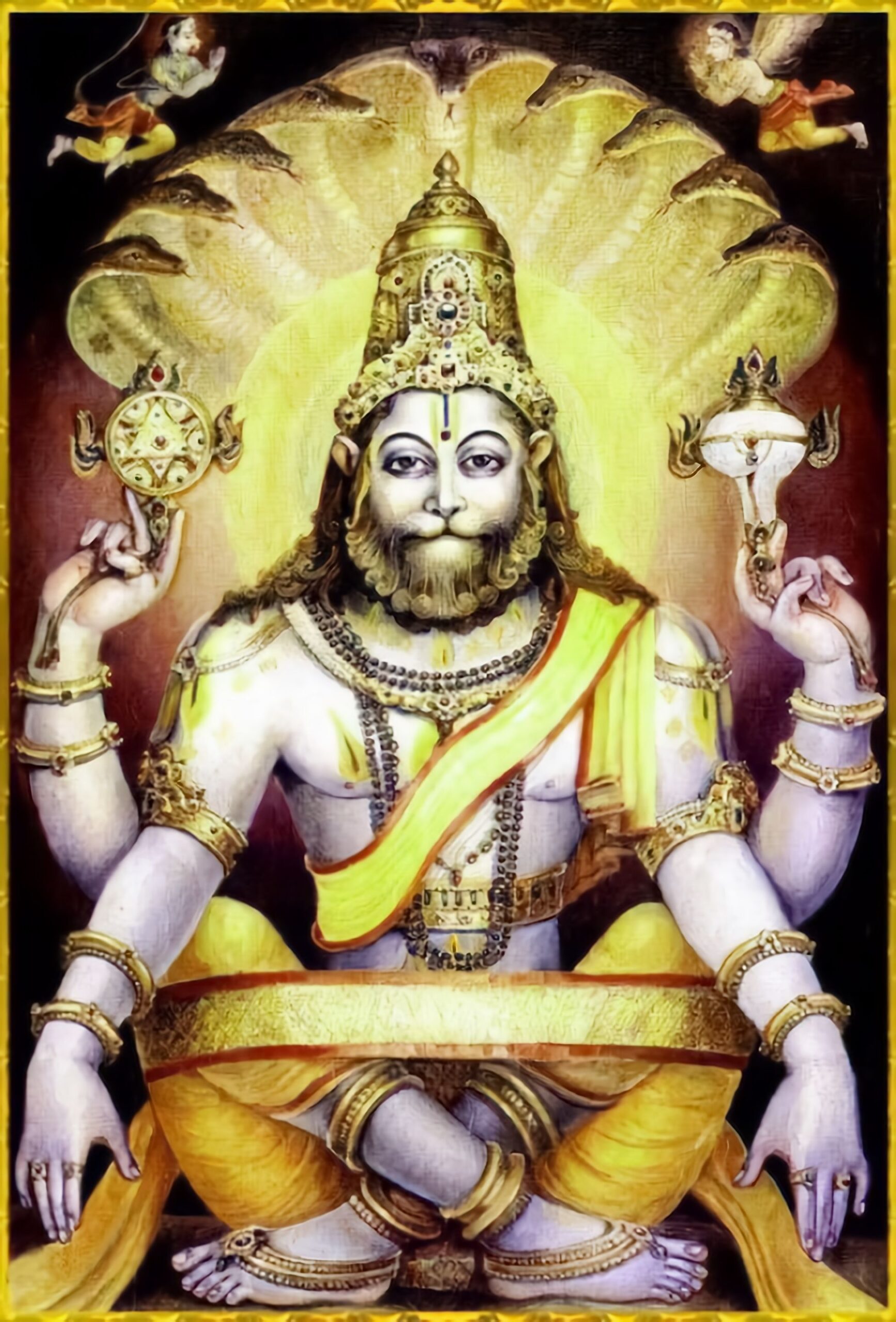
This act of tearing open Duhshaasana’s chest is not mere violence due to passion or rage, but a Dhaarmic act guided by the Lord Himself. Madhva describes this as a form of Yagnya, where the “blood”, symbolic as Soma, is offered to Narasimha. Just as Narasimha took His ferocious man-lion form to destroy the evil Hiranyakashipu, the Lord’s son Vaayu takes Kshatriya avataara and repeats the glorious history of his Father.
The above perspective (as explained in detail by Shri Bannanje Govinda Acharya in his work referenced below) reframes the entire event: Bheema is not the independent doer acting out of anger or passion, but an instrument of the Lord’s will, destroying evil under His guidance.
Vaayu’s son Rudra continues this mission of destroying evil leveraging Narasimha’s awesome power. The काम-दहन incident – where Kama disrupts Shiva’s meditation and is burnt by his third eye in rage – could explain why some traditions think Manyu Sukta speaks of Rudra.
To summarize, the Manyu Sukta is not a hymn to anger or to Rudra, but a powerful praise of Narasimha, revealing the Lord as the destroyer of evil, protector of dharma, and the inner controller guiding all actions – and seen through the eyes of Bheemasena, the rest of the Sukta also is actually a reflection of events in Mahaabhaarata.
ऋषि: छन्द: देवताः (Seer, Meter and Deities of the Hymn)
अस्य श्री मन्युसूक्त मन्त्रस्य ।
तापसो मन्युः भीमसेनो वा ऋषि:।
आद्याः जगती छन्दः ।
ततो नवानां त्रिष्टुप् छन्दः ।
ततः चतुर्णां जगती छन्दः ।
मन्युनामक श्रीलक्ष्मी-नृसिंहो देवता ।
Of this (अस्य) sacred (श्री) Manyu Sukta (मन्युसूक्त) hymn (मन्त्रस्य);
Taapasa Manyu (तापसो मन्युः) or Bheemasena (भीमसेनः वा) is the seer (ऋषि:);
the first (आद्याः) is in Jagati meter (जगती छन्दः);
then (ततो) the next nine (नवानां) are in Trishtup (त्रिष्टुप् छन्दः);
then (ततः) the last four (चतुर्णां) are in Jagati (जगती छन्दः);
the deity (देवता) is Lakshmi Narasimha (श्रीलक्ष्मीइनृसिंहः) with the appellation “Manyu” (मन्युनामक).
- Manyu Sukta appears in Rig Veda (10.83-84 or 10.80-81 according to sampradaaya) as 2 separate sukta-s mentioning Taapasa Manyu as Rishi
- The same Sukta also appears in Atharva Veda (4.31-32) mentioning Brahmaaskanda as Rishi.
- While one mantra can be seen by many Rishis, Acharya Madhva clarifies by personal experiential knowledge that both these also refer to Bheema as the seer.
- While Tapas popularly refers to austerity, here it refers to Lord Almighty who is of the nature of perfect knowledge. Consequently, Taapasa Manyu refers to Vaayu, the Lord’s chief devotee who is blessed with perfect knowledge.
- Since Vaayu is the future Brahma, he is also referred to as Brahmaaskanda.
- This Sukta draws parallels to Mahaabharata incidents of its seer, Bheema (translation in preparation).
स्तुति (Praise of Lord’s Name, Qualities and Actions)
उग्रं वीरं महा-विष्णुं ज्वलन्तं सर्वतः-मुखम् ।
नृसिंहं भीषणं भद्रं मृत्यु-मृत्युं नमामि अहम् ॥
I bow (अहम् नमामि) to the ferocious (उग्रं), heroic (वीरं), great all-pervading Lord (महा-विष्णुं), blazing (ज्वलन्तं), facing all directions (सर्वतः-मुखम्);
to the Man-Lion form (नृसिंहं), terrifying (भीषणं), auspicious (भद्रं), the destroyer of death itself (मृत्यु-मृत्युं).
- Narasimha embodies both wrath (उग्रं, भीषणं) to the evil, and grace (भद्रं) to good people.
- सर्वतः-मुखम् indicates omnipresence and omniscience, not a limited form.
- मृत्यु-मृत्युं establishes absolute supremacy — even death is controlled by Him.
प्राणायाम (Regulation of Life-Force)
वज्र-कल्पं त्रि-नयनं सर्व-शत्रु-निषूदनं ।
द्वात्रिंशत्-आयुध-उपेतं ध्यायेत् त्वां मन्यु-रूपिणम् ॥
One should meditate (ध्यायेत्) on your (त्वां) Manyu form (मन्यु-रूपिणम्); Who is
like a thunderbolt (वज्र-कल्पं), having three eyes (त्रि-नयनं), the destroyer of all enemies (सर्व-शत्रु-निषूदनं), bearing 32 weapons (द्वात्रिंशत्-आयुध-उपेतम्).
- The Manyu form of Lord Narasimha is invoked as the supreme destroyer of Adharma.
- Bearing multiple weapons indicates His infinite capability (not limited to just 32).
- Three-eyed reflects the Lord’s all-seeing nature. Specifically सूर्य (Sun) representing energy and creation, चन्द्र (Moon) representing compassion and sustenance, and अग्नि (Fire) for destruction of evil.
- Three-eyed is not a reference to Rudra who is popularly known by this description, but actually refers to his grandfather Narasimha, from whom Rudra derives his divine powers.
ध्यानम् (Focused Meditation on the Lord)
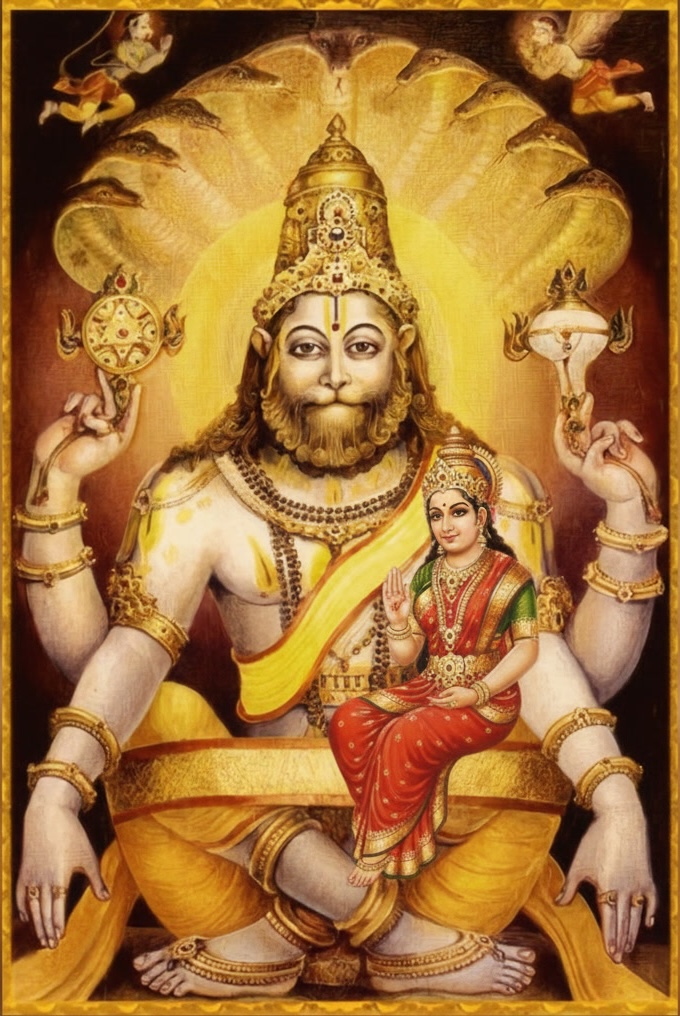
ध्यायेत् नृसिंहम् उरु-वृत्त-रवि-त्रि-नेत्रम् जानु-प्रसक्त-कर-युग्मम् अथ अपराभ्याम् ।
चक्रं दरं च दधतं प्रियया समेतं तिग्म-अंशु-कोटि-अधिक-तेज-समग्र-शक्तिम् ||
One should meditate (ध्यायेत्) on Narasimha (नृसिंहम्) Who is broad chested (उरु-वृत्त);
with three eyes like suns (रवि-त्रि-नेत्रम्);
with two hands (कर-युग्मम्) resting on his knees (जानु-प्रसक्त),
and the other two [hands] (अथ अपराभ्याम्) holding (दधतं) discus (चक्रं) and conch (दरं च); u
together with His beloved [Lakshmi] (प्रियया समेतम्);
possessing complete power (समग्र शक्तिम्);
with brilliance (तेज) greater than crores (कोटि अधिक) of blazing sun rays (तिग्म-अंशु).
- This shloka is given to us by Acharya Madhva in Tantrasaara Sangraha 4.15.
- The visualization is of Narasimha’s moola form that is real, personal and suitable for Upaasana.
- Lord is presiding in His calm Yoga pose confirming that मन्यु = मन ज्ञाने, i.e. in the form of knowledge, not mere anger.
- Presence of Lakshmi in this moola roopa description affirms their inseparability and that Lord’s blessings through Her are also invoked.
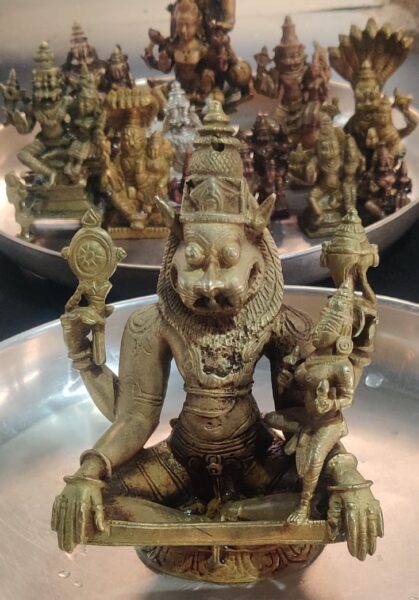
संदर्भसूची (References)
- “Sri Manyu Sukta Madhva Interpretation” by V. R. Panchamukhi
- “paMchasUktagaLu”, Sri Bannanje Govindacharya (English translation blog)
- “Manyu Sukta – Purascharana vidhi” by H. K. Srinivasa Rao
- “Shri Manyu Sukta PurashcharaNam”, Sri Madhva Mantra Ratnakara with Dheerendra Teertharu PaaTha (p.270-)
- Manyu Sukta Pravachana Series by Pt. Vidyasimhacharya Mahuli
Translation in simple “Sahuri-style” (as above) of all 14 shlokas of Manyu Sukta is also currently in preparation based on the above references.
/Raghunath Rao/ “Do your Best … and leave the Rest … “
(All mistakes mine – all credit to Gurus and Acharyas )
|| sarvaṁ śrī kṛṣṇārpanamastu ||