हरि सर्वोत्तम । वायु जीवोत्तम | श्री गुरुभ्यो नमः
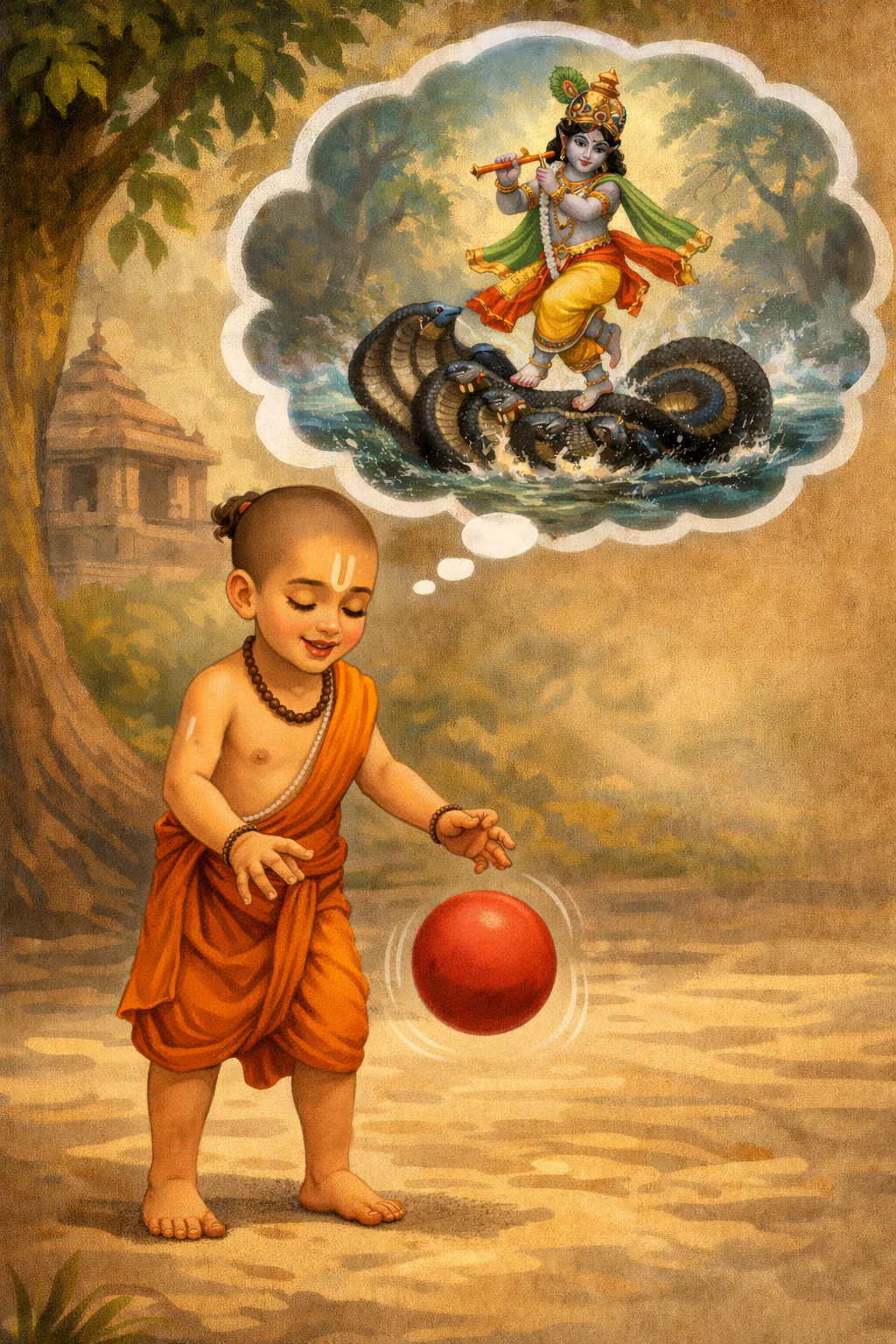
अम्बर-गङ्गा-चुम्बित-पादः पद-तल-विदलित-गुरुतर-शकटः ।
काळिय-नाग-क्ष्वेल निहन्ता सरसिज-नवदल विकसित-नयनः ॥
काल-घनाली-कर्बुर-कायः शर-शत-शकलित सुर-रिपु-निवहः ।
सन्ततम्-अस्मान्-पातु मुरारिः सततग-समजव-खगपति-निरतः ॥
He:
- Whose feet (पादः) were kissed (चुम्बित) by celestial Ganga (अम्बर-गङ्गा);
- the sole of Whose feet (पद-तल) shattered (विदलित) the very heavy cart (गुरुतर-शकट );
- Who is the destroyer (निहन्ता) of the poison of the serpent (नाग-क्ष्वेल) Kaliya (काळिय);
- Whose eyes (नयनः) are blossomed (विकसित) like fresh petals (नवदल) of a lotus (सरसिज);
- Whose body (कायः) is dark (काल) like a radiant (कर्बुर) cluster of dense storm clouds (घनाली) ;
- Who annihilated (शकलित) the hosts (निवहः) of enemies of the gods (सुर-रिपु) with hundreds of arrows (शर-शत);
- Who is mounted upon (निरतः) Garuda, the lord of birds (खगपति), who moves with the speed of (समजव) the always-moving wind (सततग),
may that slayer of the demon Mura (मुरारिः) always(सन्ततम्) protect (पातु) us (अस्मान्).
Notes:
- As a little boy, Acharya Madhva composed this playful verse using rhythmic syllables like the bouncing of ball (कन्दुक).
- Additionally, this verse is in praise of Lord Almighty who creates, regulates and withdraws the universe as acts of play, like bouncing a ball.
- The words are tongue-twisting and like a puzzle have hidden meaning upon further inspection.
- So this shloka is ideal for children to learn and chant since it is fun, just a bit challenging and very meaningful.
- कम् means “bliss” and दुक refers to the “giver of” – signifying that chanting this shloka leads us towards Lord and our liberation.
- [1] refers to Vaamana Avataara, where Lord’s 2nd step enveloped the heavens from where Ganga descends on to His feet.
- [2] refers to Krishna as a child destroying Shakataasura, the demon in the form of a cart.
- [3] refers to how Krishna removed the poison of Kaliya, destroying his evil nature but sparing him per the request of his wives.
- [4] shows that these activities are mere play for the untiring Lord – so His eyes are always fresh and wide open.
- [5] not only highlights Lord’s power of holding opposites (dark yet radiant like gold) but also that like water-laden dark clouds, He is the repository of infinite good qualities, ready to shower blessings on true devotees.
- [6] refers to Krishna’s vanquishing Kamsa, Jarasandha and other evil demons while still a young lad.
- All the above describe the Lord in a child-like form, consistent with the playful nature of the verse, and also Acharya’s age when he composed it.
/Raghunath Rao/ “Do your Best … and leave the Rest … “
(All mistakes mine – all credit to Gurus and Acharyas )
|| sarvaṁ śrī kṛṣṇārpanamastu ||